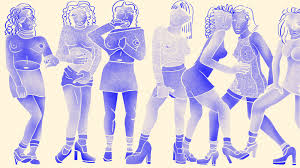
Eps 16: women's ideal body types thought out history from prehistoric times to now
— History
The podcast traces how women’s ideal body types have evolved, starting from prehistoric times where fertility and survival were paramount, often exemplified by the voluptuous Venus figurines. Moving forward to Ancient Greece, where athletic and muscular female forms were celebrated. During the Renaissance, fuller and more voluptuous bodies were idealized, reflecting the era’s focus on abundance and fertility. The 19th century pivoted to an hourglass figure, epitomized by corsets creating tiny waists and fuller hips and busts. The 1920s flapper era brought about a preference for a slimmer, boyish figure, contrasting sharply with the previous century’s ideals. The mid-20th century saw a return to more feminine curves with icons like Marilyn Monroe representing the ideal. The late 20th century and early 2000s favored an athletic, slim body type, influenced by media and fashion industries. Recently, there’s been a growing acceptance and celebration of diverse body types, reflecting a broader cultural shift towards body positivity and inclusivity.
| Seed data: | Link 1 |
|---|---|
| Host image: | StyleGAN neural net |
| Content creation: | GPT-3.5, |
Host

Crystal Barnes
Podcast Content
As we progress to the Renaissance period, the pendulum swung back to fuller figures, with rounded bodies, soft curves, and ample bosoms celebrated in artworks like those of Rubens. Such depictions showcased wealth and the ability to afford abundant food. The Victorian era saw a marked shift where wasp waists achieved through tight corseting became the gold standard, alongside wide hips and full skirts, emphasizing an hourglass figure that symbolized femininity and modesty.
In the early 20th century, the flapper era introduced a radically different ideal with women aspiring to achieve a youthful, boyish figure with flat chests and slim hips, echoing newfound freedoms and a break from traditional roles. The mid-20th century, particularly the 1950s, marked a return to the hourglass silhouette with stars like Marilyn Monroe epitomizing the ideal of full busts and narrow waists. The late 20th century brought the rise of the supermodel, with tall, slender figures like those of Cindy Crawford and Naomi Campbell dominating the fashion world.
Entering the 21st century, diverse representations of body types began to emerge more prominently. The early 2000s were heavily influenced by the "heroin chic" look with ultra-thin, androgynous figures popularized by Kate Moss. However, in recent years, there has been a comprehensive shift towards embracing a variety of body types, promoting body positivity and health at every size. Figures like Kim Kardashian have celebrated curvier silhouettes, while the fashion industry has made strides in inclusive sizing and representation.
Throughout history, the ideal body type for women has been far from static, continually reshaped by cultural, economic, and social forces. While past ideals often imposed restrictive measures to conform to fleeting trends, today's growing emphasis on inclusivity and self-acceptance marks a significant evolution. Understanding this historical context allows us to appreciate the diversity of beauty standards and encourages a more inclusive perspective on body image.