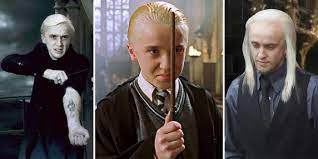
Eps 1: Why Draco is a good Character
In a 10-minute podcast episode titled "Why Draco is a good Character," the speaker argues that Draco Malfoy, a character from the Harry Potter series, should be seen as more than just a one-dimensional bully. Instead, the speaker contends that Draco possesses certain complexities that make him a compelling character. They highlight several reasons to support this claim. First, the podcast emphasizes that Draco is a product of his upbringing and environment. Growing up in a household that preached pure-blood supremacy, he was heavily influenced by his father's beliefs. This perspective helps humanize Draco, as it shows that his actions are not solely driven by malice but also by the values instilled in him. Additionally, the podcast mentions the theme of redemption in Draco's character arc. Despite being positioned as a villain, Draco struggles with the consequences of his actions. An example cited is his reluctance to identify Harry Potter during their encounter at Malfoy Manor, illustrating a sense of moral conflict that hints at his potential for growth and change. Furthermore, the speaker discusses the psychological toll of living under Voldemort's regime. Draco is forced into dangerous situations and is required to perform acts he may not agree with. This unique perspective allows readers to empathize with him and challenge their initial judgments. Overall, the podcast argues that viewing Draco as a well-rounded character adds depth to the story. By recognizing his complexities, such as the influences of his upbringing, his potential for redemption, and the effects of his circumstances, listeners are encouraged to perceive Draco as more than simply a typical antagonist.
| Seed data: | Link 1 |
|---|---|
| Host image: | StyleGAN neural net |
| Content creation: | GPT-3.5, |
Host

Kathy Mitchelle
Podcast Content
Introduction:
Welcome, listeners, to today's podcast episode where we will delve into the character of Draco Malfoy from the renowned Harry Potter series. Often viewed as the archetypal villain throughout the series, we aim to explore the deeper complexities of Draco and argue that he is, in fact, a good character. Despite his initial portrayal as a bully, Draco's journey displays significant character growth, allowing us to understand his motivations and empathize with his struggles. Join us as we unravel the layers of Draco Malfoy and discover why he deserves recognition as a multifaceted and compelling individual within the Harry Potter universe.
1. The Complexity of Draco's Background:
Firstly, to understand Draco's character, we must consider his family background. Born into the prestigious Malfoy lineage, Draco is burdened with the weight of expectation from an early age. Growing up in an environment that values pure-blood supremacy and Slytherin house traditions, Draco navigates a complex web of loyalty, pressure, and privilege. This complexity is integral in shaping Draco's character arc and helps us comprehend the internal conflicts he experiences.
2. The Influence of Peer Pressure:
Throughout the series, Draco is relentlessly influenced by his family, especially his father, Lucius Malfoy. This influence plays a significant role in shaping his attitudes and behavior, often leading him down a dark path. Nevertheless, Draco's character development gradually reveals how he grapples with the expectations set upon him by his family and peers. By examining the character's journey, we come to empathize with the internal struggle he faces, and we realize that Draco's choices are not solely driven by his villainous nature but rather by the burden of the expectations placed on him.
3. The Redemption Arc of Draco Malfoy:
Draco's character arc undergoes a significant transformation as the series progresses. In the final few installments, we witness Draco's struggle with his allegiance to Voldemort and the Death Eaters. His choices challenge our initial perception of him, revealing a sense of moral conflict and internal battle. Ultimately, Draco's refusal to identify Harry to Voldemort during the Battle of Hogwarts showcases his moral compass, highlighting his potential for goodness amidst the darkness. This pivotal moment in the series further solidifies Draco as a multi-dimensional character deserving of recognition and appreciation.
4. The Power of Empathy:
One of the reasons why Draco is a good character lies in our ability, as readers, to sympathize with him. Despite his initial antagonistic role, through J.K. Rowling's expert storytelling, we are given glimpses into Draco's vulnerability and the struggles he faces. Rowling allows us to see beyond the facade of villainy, ultimately provoking empathy and understanding. This ability to create empathy within readers is a testament to the depth and complexity of Draco's character, which sets him apart from being a mere one-dimensional antagonist.
Conclusion:
In conclusion, Draco Malfoy's portrayal is far from being a straightforward villain in the Harry Potter series. His character arc is characterized by internal conflicts, moral dilemmas, and significant growth. As listeners of this podcast, we have explored Draco's complexities, acknowledging the impact of his family background and the power of peer pressure. We have uncovered his redemption arc and the pivotal role he plays during the Battle of Hogwarts, and we have recognized the power of empathy that this character evokes.
Draco's journey challenges our initial perceptions, reminding us that even those we deem as "villains" possess the potential for personal growth, redemption, and ultimately, goodness. By exploring Draco's multidimensional character, we are encouraged to reconsider our notions of what defines a "good" character, compelling us to appreciate the depth and intricacies of J.K. Rowling's creation.