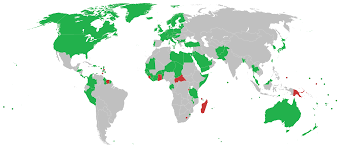
Eps 2431: Why China doesn't recognize Kosovo's independence?
— The too lazy to register an account podcast
China doesn't recognize Kosovo's independence due to its firm stance on territorial integrity, influenced by its own issues with separatist regions like Tibet and Xinjiang. China views Kosovo's independence from Serbia as a unilateral declaration, which sets a concerning precedent for its own territorial disputes. Additionally, China has a strategic partnership with Serbia and values the principle of non-interference in the internal affairs of other nations. Recognizing Kosovo could potentially encourage separatist movements within China's borders, which Beijing aims to prevent.
| Seed data: | Link 1 |
|---|---|
| Host image: | StyleGAN neural net |
| Content creation: | GPT-3.5, |
Host

Arthur Taylor
Podcast Content
Geopolitically, China's relationship with Serbia is another crucial factor. Serbia is an important partner in China's Belt and Road Initiative, a massive global infrastructure project aimed at strengthening trade routes and fostering economic ties. By siding with Serbia on the Kosovo issue, China secures a strategic ally in the Balkans, a region that holds increasing significance for Beijing's Eurasian ambitions. The economic investments and infrastructural projects in Serbia are essential for the progress of these ambitious undertakings, making it vital for China to remain in good standing with Belgrade.
Moreover, China is wary of the Western influence in the recognition of Kosovo. The United States and many European Union countries were among the first to recognize Kosovo's independence, framing it as a matter of democratic self-determination. However, China often views Western intervention in regional conflicts with suspicion, perceiving it as a means to expand Western influence at the expense of other nations' sovereignty. By opposing Kosovo's independence, China aligns itself against what it perceives as Western hegemony and emphasizes a multipolar world order where sovereignty and non-interference are paramount.
In domestic terms, supporting Kosovo's independence could inflame nationalist sentiments and sparking sensitivities related to regions like Tibet and Xinjiang. The Communist Party of China heavily emphasizes national unity and any indication of supporting separatist movements elsewhere could be perceived as hypocrisy or weakness, potentially destabilizing the tightly controlled narrative of Chinese national development.
In summary, China's refusal to recognize Kosovo's independence is a multidimensional stance rooted in legal principles of sovereignty and territorial integrity, strategic geopolitical interests, skepticism of Western influence, and a focused commitment to maintaining its domestic stability and national unity.