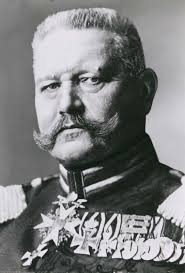
Eps 1: Who Ruled Germany Before Hitler Weimar Republic (1918-1933)
Following World War I and the abdication of Kaiser Wilhelm II, Germany was governed by the Weimar Republic from 1918 to 1933. This period was marked by significant political instability, economic hardship, and social challenges. The Weimar Republic struggled with issues such as hyperinflation, political extremism, and the fallout from the Treaty of Versailles. Despite a brief period of relative stability and cultural flourishing in the mid-1920s, ongoing economic woes and political fragmentation eventually led to the rise of Adolf Hitler and the Nazi Party, leading to the end of the Weimar Republic in 1933.
| Seed data: | Link 1 |
|---|---|
| Host image: | StyleGAN neural net |
| Content creation: | GPT-3.5, |
Host

Marion Hawkins
Podcast Content
Politically, the Weimar Republic was characterized by a highly fragmented parliament, known as the Reichstag, with numerous parties from the far left to the far right. This fragmentation made it difficult to form stable governments, resulting in frequent changes in leadership and contributing to a perception of ineffectiveness and chaos. The republic also faced significant threats from both communist and nationalist factions. The Kapp Putsch in 1920 and the Beer Hall Putsch led by Hitler in 1923 were both failed attempts to overthrow the government. Despite these challenges, the Weimar Republic did see periods of relative stability and cultural flourishing, particularly during the “Golden Twenties” from 1924 to 1929, thanks to American loans and investments that temporarily stabilized the economy.
However, the onset of the Great Depression in 1929 dealt a critical blow to the Weimar Republic. The worldwide economic downturn led to massive unemployment and further radicalized an already disillusioned populace. Political extremism gained traction, most notably with the rise of the National Socialist German Workers' Party (NSDAP) led by Adolf Hitler. The inability of the Weimar Republic’s leaders to effectively address the economic crisis and the political fragmentation created a vacuum that Hitler capitalized on. By January 1933, Hitler was appointed Chancellor, marking the end of the Weimar Republic and the beginning of the Nazi era.
Throughout its existence, the Weimar Republic represented a bold but ultimately unsuccessful experiment in German democracy. Its struggles with economic hardship, political instability, and societal upheaval set the stage for the rise of totalitarianism. Understanding this period is crucial for comprehending how Hitler was able to ascend to power and the factors that contributed to one of the darkest chapters in modern history.