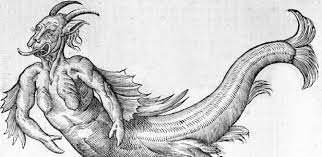
Eps 1: What's a monster
In the podcast titled "What's a monster," the speaker explores the concept of monsters and their broader cultural significance. Monsters are defined as creatures that deviate from normalcy, often possessing features or behaviors that inspire fear or discomfort. While they can be physical beings such as vampires or werewolves, monsters can also assume non-physical forms, representing human traits like greed or lust. Monsters play a significant role in literature, films, and folklore and are often used as metaphors to represent societal fears and anxieties. By presenting fantastical creatures, monsters allow individuals to confront their fears in a controlled environment. Ultimately, monsters serve as a medium for exploring the dark aspects of human psychology, helping us understand our own fears and confront them.
| Seed data: | Link 1 |
|---|---|
| Host image: | StyleGAN neural net |
| Content creation: | GPT-3.5, |
Host

Madison Walker
Podcast Content
When we hear the word "monster," our minds often conjure up images of terrifying creatures lurking in the dark. From the fictional beings of literature and movies to the folklore and urban legends of cultures worldwide, monsters have long captivated our imaginations. But what exactly defines a monster? Is it solely a creature with grotesque appearances and malicious intent, or is there more to the concept?
At its core, the term "monster" derives from Latin and Middle French, meaning "an omen or sign." In its early usage, it referred to a divine or supernatural being that held significance and garnered awe or fear. Thus, the definition of a monster evolved from a creature that was revered to one that infused terror. However, what truly distinguishes a monster from other creatures is subjective and varies throughout history, culture, and individual perceptions.
One common thread in the concept of a monster is its deviation from the norm. Monsters often possess physical attributes that depart from the expectations and ideals of society. It could be an excessive size, deformed or unnatural shape, or a combination of unusual limbs and features. These physical abnormalities challenge the boundaries of what is "normal" or "acceptable." In this sense, a monster becomes a visual representation of our deepest fears and anxieties about the unknown and the unfamiliar.
Yet, a monster is not solely defined by its physical appearance. It is the actions, intentions, and behaviors that truly determine its monstrous nature. Monsters are often associated with acts of violence, destruction, and harm towards both humans and their environment. They represent the epitome of evil, seeking to cause chaos and instill fear in those they encounter. Additionally, their ability to prey on our vulnerabilities and weaknesses amplifies their power as symbols of terror.
Interestingly, beyond their outward manifestations of wickedness, monsters often carry symbolic meanings deeply rooted in cultural beliefs and societal anxieties. They can reflect our deepest desires, suppressed emotions, or even moral dilemmas. For instance, Frankenstein's monster embodies the fear of science gone awry and the consequences of playing God. Dracula personifies our fears of sexual liberation and the unknown. These literary monsters serve as allegorical devices, allowing us to explore complex themes and contemplate our own humanity.
Moreover, monsters can be seen as a reflection of social and historical contexts. They often emerge during times of societal unrest, political turbulence, or cultural shifts. By embodying our fears and anxieties, monsters serve as a cautionary tale or a rallying point to unite against a common threat. Examples include the numerous Godzilla films, depicting the monster as a metaphor for the destructive power of atomic weaponry, or the vampire genre flourishing during times of social upheaval, such as the AIDS epidemic or the fear of immigrants.
In recent years, the concept of a monster has experienced a shift in popular culture. With the emergence of antiheroes and morally ambiguous characters, the lines between "good" and "evil" have become blurred. Monsters are no longer confined to the confines of clear-cut villainy. Instead, they can possess redeeming qualities or undertake actions that challenge our preconceived notions. This evolution prompts us to question our own understanding of morality and the complex nature of human existence.
In conclusion, the definition of a monster lies beyond its surface-level appearances. Monsters capture our fears and anxieties, presenting us with symbols that transcend their physical form. Whether they evoke terror, serve as allegorical devices, or symbolize societal concerns, monsters hold a mirror to our deepest emotions, forcing us to confront and understand ourselves in the process. So, the next time you encounter a monster in a story or a dark corner of your imagination, remember that it is more than just a creature with sharp claws or haunting eyes – it is a reflection of our fears, desires, and the complexities of the human condition.