Eps 1: Universal basic income a radical shift in modern capitalist society
In the podcast titled "Universal basic income, a radical shift in modern capitalist society," the concept of universal basic income (UBI) is explored as a potential solution to the challenges faced by modern capitalism. UBI is defined as a guaranteed income provided by the government to all citizens, regardless of their employment status. The host first introduces the idea that capitalism has given rise to significant income inequality and economic insecurity. To address these issues, UBI proponents argue that providing a basic income to all individuals could alleviate poverty, reduce inequality, and ensure economic stability. The podcast highlights various arguments in favor of UBI. Advocates suggest that it could simplify the welfare system, eliminate bureaucratic inefficiencies, and provide individuals with the necessary resources to meet their basic needs. Moreover, UBI is seen as a way to address technological advancements that could potentially replace jobs in the future, offering individuals a safety net amidst automation. However, the podcast also delves into some criticisms and potential challenges associated with implementing UBI. Some argue that it could disincentivize work and create a dependency culture, potentially leading to economic stagnation. Others raise concerns about the high cost of implementing UBI and how it would be funded. Overall, the podcast recognizes UBI as a radical departure from the current capitalist system. While proponents promote it as a transformative solution to poverty and inequality, skeptics highlight the need for careful consideration of its potential drawbacks.
| Seed data: | Link 1 |
|---|---|
| Host image: | StyleGAN neural net |
| Content creation: | GPT-3.5, |
Host

Michele Franklin
Podcast Content
One of the key benefits of UBI is its potential to address the challenges posed by automation and the gig economy. With advances in technology threatening to disrupt industries and eliminate jobs, UBI offers a safety net for workers who may find themselves unemployed or underemployed. By ensuring that every citizen has a basic income, UBI can help individuals adapt to changing economic conditions and pursue opportunities for retraining and lifelong learning. This could lead to a more flexible and dynamic labor market, where individuals are free to pursue their passions and contribute to society in ways that align with their interests and skills.
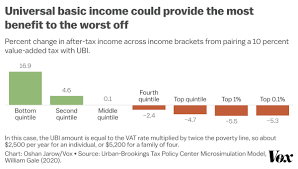
Furthermore, UBI has the potential to reduce poverty and inequality by providing a financial cushion for those who are struggling to make ends meet. By guaranteeing a basic income to all citizens, regardless of their employment status, UBI can help to lift people out of poverty and provide them with the means to meet their basic needs. This can have a significant impact on social mobility, allowing individuals to pursue education, job training, and entrepreneurial endeavors without the fear of financial insecurity. In this way, UBI can help to create a more equitable society where everyone has the opportunity to thrive and succeed.
Critics of UBI argue that it is too costly and could disincentivize work, leading to a decrease in productivity and economic growth. However, proponents of UBI point to pilot programs and research studies that have shown positive outcomes, such as improved mental health, increased entrepreneurship, and higher levels of civic engagement. By providing individuals with a financial safety net, UBI can enable them to take risks, explore new opportunities, and contribute to society in meaningful ways.
In conclusion, universal basic income represents a radical shift in modern capitalist society that has the potential to address income inequality, automation, and poverty. By guaranteeing a basic income to all citizens, UBI can provide financial security, promote social mobility, and stimulate economic growth. While there are valid concerns and challenges associated with implementing UBI, it is clear that this innovative social policy has the potential to create a more just and prosperous society for all. As we continue to explore new ways to address the complex challenges of the 21st century, universal basic income offers a promising solution that deserves serious consideration and debate.