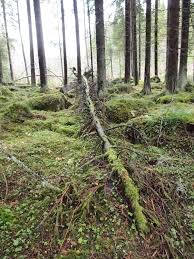
Eps 660: Trees falling in forests
— The too lazy to register an account podcast
The objects of sense exist only when they are perceived; the trees are in the garden...
Many scientists would argue that a truly unobserved event is one which realises no effect (imparts no information) on any other (where 'other' might be e.g., human, sound-recorder or rock), it can have no legacy in the present (or ongoing) wider physical universe.
People may also say, if the tree exists outside of perception (as common sense would dictate), then it will produce sound waves .
Host

Elaine Jenkins
Podcast Content
One school of thought argues that the sound of a falling tree is a subjective experience that requires a listener to perceive it. In this view, sound is not an objective reality but rather a perception created by an observer. From this perspective, if there is no one around to hear the tree fall, then there is no sound. This theory raises important questions about the nature of reality and the role of consciousness in shaping our perceptions of the world around us.
On the other hand, some scientists and philosophers believe that sound is an objective phenomenon that exists independently of human perception. According to this perspective, the vibrations created by a falling tree produce sound waves that propagate through the air regardless of whether there is a listener present. From this point of view, the sound of the tree falling exists whether or not someone is there to hear it.
To further complicate matters, recent advances in technology have allowed us to record sounds in remote areas where humans are not present. These recordings have captured the sounds of trees falling, animal calls, and other natural phenomena that occur in the absence of human observers. These recordings provide evidence that sounds exist in the natural world independent of human perception, supporting the argument that the sound of a falling tree is a real, objective phenomenon.
In addition to the philosophical and scientific implications of this debate, the question of whether a tree makes a sound when it falls has important practical implications for conservation and environmental management. Understanding the sounds produced by falling trees can help us monitor forest ecosystems, track the health of tree populations, and identify areas of high environmental risk.
As we navigate the complexities of this debate, it is important to keep in mind that the question of whether a tree makes a sound when it falls is not just an abstract philosophical puzzle. It is a gateway to deeper questions about the nature of perception, reality, and our relationship with the natural world. By pondering this age-old question, we can gain a greater appreciation for the interconnectedness of all living beings and the profound mysteries that surround us. So the next time you find yourself walking through a quiet forest, take a moment to listen to the sounds of the trees around you. Who knows what secrets they might reveal?