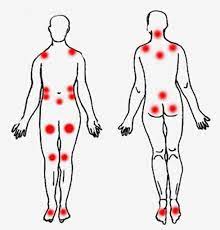
Eps 1: Ticklish spots
In a 10-minute podcast titled "Ticklish spots," the speaker discusses the nature and science behind ticklishness. The podcast explains that tickling is a unique sensation that is experienced across various species and serves different purposes. It is suggested that ticklishness could be an evolutionary response to defend vulnerable areas of the body from potential harm. The speaker emphasizes that tickling is most intense in certain areas that are highly sensitive, such as the armpits, soles of the feet, and neck. The podcast delves into the physiological mechanisms involved in tickling, including the role of nerve endings and neural pathways. It also explores the differentiation between self-tickling and being tickled by someone else, with the latter being generally more ticklish due to the element of surprise and lack of control. Overall, the podcast provides an informative overview of the science and psychology behind ticklish spots.
| Seed data: | Link 1 |
|---|---|
| Host image: | StyleGAN neural net |
| Content creation: | GPT-3.5, |
Host

Stacey Wade
Podcast Content
First of all, let's start by understanding what exactly tickling is. Tickling is a unique sensation that can induce laughter, squirming, or even discomfort in some individuals. It's a fascinating phenomenon that has puzzled scientists and psychologists for years. There are two main types of tickling: knismesis and gargalesis. Knismesis is a light, gentle tickle that usually provokes an itching sensation, while gargalesis is a more intense form of tickling that can trigger laughter and involuntary movements.
Now, let's talk about ticklish spots. Have you ever noticed that certain areas of your body are more sensitive to tickling than others? The most common ticklish spots are the soles of the feet, underarms, sides, and neck. These areas tend to be more ticklish because they have a higher concentration of nerve endings, making them more sensitive to touch. In fact, the soles of the feet are among the most sensitive parts of the body, which is why many people find it unbearable to have their feet tickled.
But why are some people more ticklish than others? The answer lies in a combination of genetic, psychological, and environmental factors. Some studies suggest that being ticklish may be a sign of emotional vulnerability, as tickling can trigger feelings of helplessness and vulnerability. Others believe that being ticklish is a natural defense mechanism that helps us protect our most vulnerable areas from potential threats. Additionally, our individual sensitivity to touch and our personal experiences can also play a role in how ticklish we are.
Interestingly, the way we react to tickling can vary depending on our mood, the context in which we're being tickled, and even our relationship with the person doing the tickling. For example, some people may find tickling enjoyable and pleasurable when it's done by a trusted friend or partner, while others may find it irritating or even painful. This highlights the complex nature of tickling and how it can evoke different responses in different individuals.
In conclusion, tickling is a fascinating phenomenon that has intrigued scientists and psychologists for years. While the science behind ticklish spots is still not completely understood, we do know that tickling can trigger a range of physical and emotional responses in individuals. So, the next time you find yourself giggling uncontrollably when someone tickles you, remember that it's all part of the mysterious world of ticklish spots. Thank you for tuning in to our podcast, and we hope you learned something new about the intriguing world of tickling!