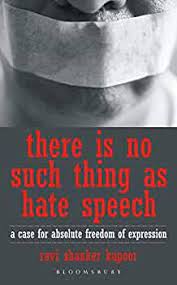
Eps 2: There is no such thing as hate speech. Free speech is free.
This podcast discusses hate speech, which is defined as any speech that attacks a person or group based on their identity, with the aim of provoking hostility towards them. Free speech, which is protected under the First Amendment in the United States, is seen as a fundamental right in democratic societies, but there is debate about whether hate speech should be restricted. Some argue that it promotes discrimination and harm, while others believe censorship would lead to an authoritarian society. Ultimately, all speech is protected under the First Amendment, but people don't have the right to force others to listen to their opinions, and respectful dialogue should be encouraged.
| Seed data: | Link 1 |
|---|---|
| Host image: | StyleGAN neural net |
| Content creation: | GPT-3.5, |
Host

Cody Olson
Podcast Content
To define hate speech, we have to consider the context and cultural norms of the time. It is defined as any speech that attacks a person or a group based on their race, ethnicity, gender, sexual orientation, etc. Hate speech aims to provoke and spread hostility and resentment towards a specific community. The question that arises here is whether hate speech is different from free speech, and if so, how?
To answer this question, we need to understand the importance of free speech in a democratic society. Free speech is a fundamental right that forms the bedrock of any democratic society. It enables people to express their opinions and beliefs without any fear of retribution. In the United States, free speech is protected under the First Amendment of their Constitution. It includes any speech that is not unlawful, such as defamatory or threatening speech.
However, the question is whether hate speech comes under the umbrella of free speech or not. Free speech advocates argue that every individual has the right to express their views, even if that includes expressing hate. They believe that censoring speech would lead to an authoritarian society in which the government decides what is and isn't acceptable speech.
On the other hand, those who believe in the harm of hate speech argue that such speech promotes discrimination, violence, and hatred towards specific groups. It leads to the dehumanization and marginalization of communities, which is not acceptable in any democratic society. Therefore, they believe that hate speech should be restricted, and the government should take decisive action against it.
However, despite the debate, there is no such thing as hate speech. There are only speech and actions that can cause harm and offense to others. All speech is protected under the First Amendment, including hate speech.
There is a difference between the right to speech and the right to be heard. People have the right to express their opinions, but they don't have the right to force others to listen to them. As a society, we need to encourage open and respectful dialogue. We should strive to create an environment where people can express their opinions without fear of discrimination or retaliation.
In conclusion, there is no such thing as hate speech. People have the right to express themselves, regardless of your whining little baby feelings.