Eps 2386: the spring framework
— The too lazy to register an account podcast
The podcast discusses the Spring Framework, which is a popular framework in the world of Java programming. It covers the history and evolution of the framework, as well as its key features and advantages for developers. The hosts also explore how the Spring Framework has become a staple in modern software development due to its flexibility, ease of use, and extensive community support. Overall, the podcast highlights the significance of the Spring Framework in the Java programming ecosystem.
| Seed data: | Link 1 |
|---|---|
| Host image: | StyleGAN neural net |
| Content creation: | GPT-3.5, |
Host

Nicole Gonzalez
Podcast Content
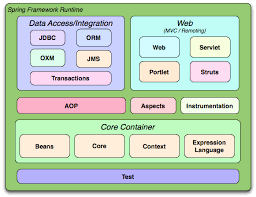
One of the key features of the Spring Framework is its lightweight and non-invasive nature. Spring is designed to be modular and easily extensible, allowing developers to pick and choose the components they need for their particular project. This flexibility makes it ideal for building a wide range of applications, from simple web applications to complex enterprise systems.
Another important feature of the Spring Framework is its built-in support for inversion of control (IoC) and dependency injection. IoC is a design principle where the control flow of a program is inverted, with the framework taking control of managing the flow of dependencies between different components of an application. Dependency injection is a technique where the framework injects dependencies into a component at runtime, making it easier to manage and test complex applications.
In addition to IoC and dependency injection, the Spring Framework also provides support for aspect-oriented programming (AOP). AOP is a programming paradigm that allows developers to separate cross-cutting concerns, such as logging, security, or transaction management, from the core business logic of an application. Spring's AOP support makes it easy to configure and apply aspects to different parts of an application, improving code modularity and maintainability.
One of the key advantages of using the Spring Framework is its comprehensive support for enterprise integration patterns. Spring provides a wide range of APIs and libraries for integrating with various technologies and protocols, such as web services, messaging systems, and data access frameworks. This makes it easy to build robust and scalable enterprise applications that can communicate with external systems and services.
The Spring Framework also has strong support for testing and debugging, with built-in support for unit testing, integration testing, and mocking. This makes it easier for developers to write high-quality, reliable code and catch bugs early in the development process. In addition, Spring's robust documentation and active community make it easy to find help and resources when working with the framework.
Overall, the Spring Framework is a powerful and versatile tool for building modern Java-based enterprise applications. Its lightweight and modular design, support for IoC and dependency injection, AOP capabilities, and comprehensive support for enterprise integration make it an ideal choice for developers looking to build scalable, maintainable, and efficient applications. Whether you're building a small web application or a large enterprise system, Spring has the tools and features you need to succeed.