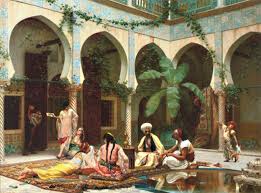
Eps 4: The palace women and harems in Asia
— History
The podcast delves into the lives of palace women and harems in Asia, highlighting their historical roles and social dynamics. It explores how harems were not merely confined spaces but complex social institutions where women exerted influence and engaged in political machinations. The discussion includes specific cultural contexts in various Asian regions, where women in harems often played significant roles in state affairs, education, and the arts. The podcast also touches on the contrast between public perceptions of harems and their actual function and significance within the palace society.
| Seed data: | Link 1 |
|---|---|
| Host image: | StyleGAN neural net |
| Content creation: | GPT-3.5, |
Host

Theresa Barnes
Podcast Content
In China, the Forbidden City was home to the emperor's wives and concubines, whose primary purpose was to produce heirs. However, these women also engaged in political machinations, influencing imperial decisions through their relationships with the emperor. The Dowager Empress Cixi, for instance, rose from a low-ranking concubine to effectively ruling China for nearly half a century. In India, the Mughal harems were centers of political activity and artistic patronage. Women like Nur Jahan, the wife of Emperor Jahangir, not only administered vast estates but also commanded troops, showing that harem life was far from one-dimensional.
Across Asia, the luxurious yet competitive atmosphere of the harems meant that women who resided within had to navigate a complex web of alliances and rivalries. These women, often brought from different parts of the world, adapted to new cultural norms while bringing their own traditions to the mix. The influence of palace women extended beyond the private chambers to the architects and artists they patronized, leaving a lasting impact on the architectural and cultural heritage of their societies. In essence, the story of palace women and harems in Asia is one of subtle yet profound power, weaving through the tapestry of history with both grace and grit.