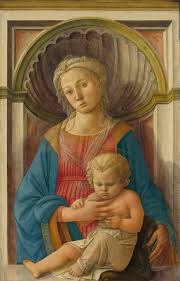
Eps 3: The Long Story of the Virgin Mary
The podcast delves into the historical and theological significance of the Virgin Mary, exploring her role in Christian doctrine and various cultural depictions. It highlights her immaculate conception, perpetual virginity, and assumption into heaven. The narrative examines early church teachings, Marian apparitions, and her representation in art and literature over the centuries. The discussion also covers differing perspectives on Mary within various Christian denominations, emphasizing her influence on faith and devotion.
| Seed data: | Link 1 |
|---|---|
| Host image: | StyleGAN neural net |
| Content creation: | GPT-3.5, |
Host

Willard Wilson
Podcast Content
Mary's journey is one of profound devotion and equally profound sorrow. After giving birth to Jesus in Bethlehem, she nurtures him through his early years and is a steadfast presence throughout his ministry. The Gospels highlight her unwavering support and the quiet strength she exhibited, even as she stood by during the Crucifixion, a moment of immense personal agony, depicted in poignant detail through centuries of Christian art and literature. Her presence at the foot of the Cross underscores her enduring faith and marks her as a paragon of maternal devotion and spiritual fortitude.
Beyond the New Testament, traditions and apocryphal texts have woven a rich tapestry around Mary's life and legacy. The belief in her perpetual virginity, her assumption into heaven, and her intercessory power has cemented her status as a central figure of veneration in Christianity, particularly within the Catholic and Orthodox churches. Titles such as "Mother of God," "Queen of Heaven," and "Our Lady" reflect her esteemed position and the myriad ways she is honored and invoked by the faithful.
Culturally, Mary's influence extends beyond religious doctrine into the realms of art, literature, and music. From the majestic cathedrals dedicated to her, like Notre-Dame de Paris, to the countless works of art by masters such as Michelangelo and Botticelli, her image has inspired beauty and reverence through the ages. Festivals, such as the Feast of the Immaculate Conception and the Assumption, celebrate her life and virtues, perpetuating her story across generations and geography.
In a world often marked by uncertainties and challenges, the Virgin Mary stands as a enduring symbol of hope, compassion, and unwavering faith. Her story, spanning humble beginnings, moments of celestial announcement, profound sorrow, and ultimate glorification, resonates with countless believers as a testament to the strength of faith and the power of spiritual connection. As a figure of divine maternity, intercessory grace, and eternal love, her legacy continues to inspire, comfort, and guide millions around the globe.