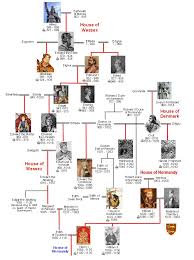
Eps 2: the family tree of the house of Wessex
— history
The podcast delves into the complex lineage of the House of Wessex, a dynasty that ruled parts of England from the 6th century until the Norman Conquest in 1066. It traces the origins back to the legendary figure Cerdic, considered the founder of the dynasty, and follows through several key monarchs such as Alfred the Great, who defended the kingdom against Viking invasions and laid the groundwork for a united England. The narrative highlights significant family members, marriages, and alliances that influenced the political landscape. Key battles and reforms under various rulers, especially Edward the Confessor, are discussed, showcasing how the family tree's various branches played pivotal roles in shaping medieval England's history.
| Seed data: | Link 1 |
|---|---|
| Host image: | StyleGAN neural net |
| Content creation: | GPT-3.5, |
Host

Beth Cunningham
Podcast Content
Egbert’s son, Æthelwulf, carried forward this legacy and fathered sons who would dominate the English political landscape. The most notable among them was Alfred the Great, whose reign from 871 to 899 AD stands as a beacon in the annals of English and indeed Western history. Alfred's efforts in defending his realm from Viking invasions and his role in reviving learning and law are legendary. He is also credited with establishing the concept of a united English nation, a unity which become more concrete under his descendants.
Alfred’s grandson, Æthelstan, ascended as King of the Anglo-Saxons in 924 AD and later as the first King of the English. His extensive campaigning and significant victories, including the pivotal Battle of Brunanburh in 937 AD, where his forces defeated a grand coalition of Scots, Vikings, and others, crystallized his status as the ruler of a more definitively unified England. This marked a significant milestone for the House of Wessex. Æthelstan’s death led to a succession of rulers within the family who maintained and occasionally expanded their dominance over England.
The Wessex lineage continued with Edmund I and Eadred, who both faced ongoing Viking threats but managed to uphold the family’s influence. Edgar the Peaceful's long reign from 959-975 AD, however, symbolizes a golden period of stability and consolidation under the Wessex dynasty. His peaceful rule contrasts sharply with the turbulent years following his death, including the reign of his son, Æthelred the Unready, whose struggles against renewed Danish invasions weakened English unity.
Despite these challenges, the final significant ruler from the House of Wessex was Edward the Confessor, who reigned from 1042 until his death in 1066. Edward's piety and the lack of a clear heir led to succession disputes that precipitated the Norman Conquest. The house’s legacy, however, is indelible in the annals of British history, for it set the stage for the eventual formation of the English nation-state. Their familial branches, efforts in centralizing power, and roles in important battles, all weave together to create the intricate tapestry known as the family tree of the House of Wessex.