Host

Suzanne Arnold
Podcast Content
To understand machine learning, we must first understand the concept of data. Data is the foundation of machine learning, and it can come in many different forms such as images, text, and numbers. The more data we have, the better our machine learning models can learn and make predictions.
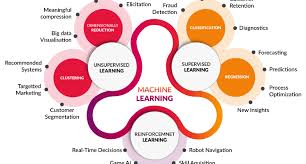
There are three main types of machine learning: supervised learning, unsupervised learning, and reinforcement learning. In supervised learning, the model is trained on labeled data, meaning that the input data is paired with the correct output. The model learns to make predictions by finding patterns in the input-output pairs. Unsupervised learning, on the other hand, involves training the model on unlabeled data, where the model must find patterns and relationships on its own. Finally, reinforcement learning involves training the model to make decisions based on trial and error, receiving rewards for good decisions and punishments for bad decisions.
One of the key concepts in machine learning is the idea of a model. A model is a mathematical representation of the data that allows the computer to make predictions. There are many different types of models, including linear regression, decision trees, and neural networks. Each model has its own strengths and weaknesses, and the choice of model will depend on the specific problem at hand.
In order to train a machine learning model, we must first split our data into a training set and a testing set. The training set is used to teach the model to make predictions, while the testing set is used to evaluate the model's performance. It is important to evaluate the model's performance on unseen data to ensure that it can generalize to new, unseen examples.
Once the model has been trained, it can be used to make predictions on new data. This is where the power of machine learning really shines. By analyzing patterns in the data, machine learning models can make accurate predictions and help us make better decisions.
In conclusion, machine learning is a powerful tool that is revolutionizing the way we analyze and interpret data. By understanding the basics of machine learning, we can harness its potential to make better decisions and drive innovation in a wide range of industries. Thank you for tuning in to this episode of Machine Learning Mastery. Join us next time as we dive deeper into the world of machine learning and explore more advanced concepts.