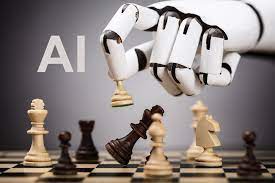
Eps 1: Sztuczna inteligencja w szachach
In a 10-minute podcast titled "Artificial Intelligence in Chess," the host discusses the impact of artificial intelligence (AI) on the game of chess. The podcast begins by highlighting how AI has revolutionized the chess world, allowing players to improve their skills and analyze games with greater precision. Chess engines, powered by AI algorithms, have been instrumental in solving complex chess problems and generating valuable insights. The podcast delves into the history of AI in chess, mentioning IBM's Deep Blue defeating world chess champion Garry Kasparov in 1997. This victory marked a significant milestone in AI development as it showcased the immense power of computing and machine learning algorithms in the game. Since then, AI has continued to advance, with modern engines like Stockfish and AlphaZero outperforming human players and providing innovative strategic approaches. The host emphasizes how AI engines have become an indispensable tool for chess players of all levels. Even professional players rely on them for preparation, training, and analysis. The podcast also discusses the influence of AI on opening theory, middlegame tactics, and endgame strategies. It highlights how AI has pushed the boundaries of what is considered "correct" play by suggesting unconventional moves that humans may not have previously considered. However, the podcast acknowledges the concerns raised by some players who believe that AI has taken away the creativity and beauty of chess. They argue that relying too heavily on AI engines may lead to a lack of originality and human intuition in gameplay. The host presents contrasting perspectives on this issue, acknowledging that while AI engines provide valuable insights, it should not overshadow the importance of human creativity and strategic thinking. Overall, the podcast recognizes the tremendous impact of AI on the chess world, from improving player skills to revolutionizing game analysis. It highlights the symbiotic relationship between humans and AI, where both can learn from one another and create a more exciting and challenging chess experience.
| Seed data: | Link 1 |
|---|---|
| Host image: | StyleGAN neural net |
| Content creation: | GPT-3.5, |
Host

Lucas Porter
Podcast Content
Chess has long been considered the ultimate test of human intelligence. The intricate strategies and complex calculations required to outwit an opponent on a 64-square board have captivated players for centuries. However, with the advent of AI, the dynamics of the game have changed. Today, AI algorithms can analyze millions of possible moves and evaluate their effectiveness in milliseconds. This has led to a new era where humans are no longer the unquestionable masters of the game.
One of the most prominent examples of AI's dominance in chess is the development of Deep Blue by IBM. In 1997, Deep Blue defeated the world chess champion, Garry Kasparov, in a six-game match. This achievement sent shockwaves through the chess community and showcased the incredible potential of AI in the game. Deep Blue's success was based on its ability to evaluate billions of possible moves per second, far surpassing any human's capabilities.
Since then, AI-powered chess engines have only become stronger and more formidable. Today, chess-playing AI programs like Stockfish and AlphaZero have reached superhuman levels. They can effortlessly defeat grandmasters and have led to the creation of new strategies and openings that were previously unseen in traditional chess. These AI-powered engines have become indispensable tools for both professional players and amateurs looking to improve their game.
However, AI's dominance in chess has also raised concerns among human players. Many worry that the advent of powerful chess engines has made the game less about creativity and more about brute calculating force. In the past, human players could rely on intuition, pattern recognition, and strategic thinking to outmaneuver their opponents. Now, AI algorithms can solve complex tactical puzzles within seconds, leaving human players feeling inadequate.
Furthermore, the reliance on AI-powered engines has also led to a decline in the popularity of human tournaments. With the fear of being outclassed by AI opponents, the allure of competing against other humans has waned. This could have long-term implications for the growth and development of the game, as human opponents provide a unique challenge and depth that AI opponents cannot replicate.
However, despite these concerns, there are also many positives that AI brings to the world of chess. AI-powered engines have become invaluable training tools for players of all levels. They can analyze games, provide insights, and offer suggestions for improvement. The accessibility of these tools has democratized the game, allowing anyone with a computer and an internet connection to learn and play chess at a high level.
Additionally, the advancements in AI have also led to exciting new variants of chess. AI-powered engines have been used to create variants like Fischer Random Chess, where the starting positions of the pieces are randomized. This adds a fresh twist to the game, challenging players to rely more on their understanding of chess principles rather than memorizing book openings. These variants have injected new life into the game and sparked interest among both new and seasoned players.
In conclusion, the integration of artificial intelligence in the game of chess has revolutionized the way we approach the game. AI-powered engines have become formidable opponents, capable of defeating grandmasters effortlessly. While this has raised concerns about the diminishing role of human creativity and intuition, it has also democratized the game and provided new challenges and variants. Ultimately, the true impact of AI in chess lies in how humans adapt and utilize this technology to enhance their playing abilities.