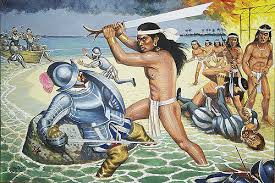
Eps 1: Spanish Colonization in the Philippines
The podcast discusses the Spanish colonization of the Philippines, which began in the 16th century and lasted for over 300 years. The Spanish brought Catholicism, new technology, and European customs to the archipelago, but also exploited and oppressed the native population. The impact of Spanish colonization on Filipino culture and society is still felt today, with influences from both Spanish and indigenous traditions shaping Filipino identity.
| Seed data: | Link 1 |
|---|---|
| Host image: | StyleGAN neural net |
| Content creation: | GPT-3.5, |
Host

Greg Dean
Podcast Content
Let's start with a brief overview of how the Spanish colonization of the Philippines began. The Spanish explorer Ferdinand Magellan arrived in the Philippines in 1521 and claimed the islands for Spain. However, it was not until 1565 that the first permanent Spanish settlement was established in Cebu by Miguel Lopez de Legazpi. This marked the beginning of Spanish colonial rule in the Philippines.
One of the most significant aspects of Spanish colonization was the spread of Christianity in the Philippines. Spanish missionaries, most notably the Augustinians, Franciscans, and Jesuits, played a crucial role in converting the indigenous population to Catholicism. This religious conversion had a profound impact on Filipino society and culture, shaping the way of life for generations to come.
Additionally, Spanish colonization brought about major changes in the political and social structure of the Philippines. The Spanish established a centralized government in Manila, which served as the seat of colonial administration. They also implemented a system of land distribution known as the encomienda system, which granted Spanish colonizers large tracts of land and control over the indigenous population.
Economically, Spanish colonization had mixed effects on the Philippines. While the Spanish introduced new crops, such as tobacco and coffee, which boosted agricultural production, they also exploited the native workforce through forced labor and heavy taxation. The galleon trade, which connected the Philippines with Mexico and other Spanish colonies, also played a significant role in the economic development of the islands.
Despite the many changes brought about by Spanish colonization, the Philippines managed to retain some aspects of its indigenous culture and traditions. The blending of Spanish and Filipino cultures gave rise to a unique cultural identity that is still evident in modern Filipino society. From cuisine to language to architecture, Spanish influences can be seen throughout the Philippines.
As we reflect on the legacy of Spanish colonization in the Philippines, it is important to recognize both the positive and negative impacts of this period in history. While Spanish rule brought about advancements in education, technology, and governance, it also led to the marginalization and exploitation of the native population. By understanding the complexities of this period, we can gain a deeper appreciation for the rich and diverse history of the Philippines.
Thank you for joining us on this journey through the history of Spanish colonization in the Philippines. We hope you have gained a greater understanding of the impact of this period on Filipino society and culture. Stay tuned for more episodes on the history and heritage of the Philippines.