Eps 10: Snakes can't fly
— The totally real science podcast
In a 10-minute podcast titled "Snakes Can't Fly," the content likely discusses the inability of snakes to fly. The summary of this podcast will focus on the key points presented during the course of the episode.
| Seed data: | Link 1 |
|---|---|
| Host image: | StyleGAN neural net |
| Content creation: | GPT-3.5, |
Host

Max Cooper
Podcast Content
[Introduction]
Welcome back to another exciting episode of our podcast, where we explore fascinating aspects of the animal kingdom. Today, we delve into the captivating world of snakes and uncover one myth that has intrigued humans for ages - the belief that snakes can fly. Join us as we debunk this common misconception and shed light on the extraordinary abilities of these incredible creatures.
[Body]
It is undeniable that snakes possess an array of remarkable adaptations that enable them to navigate diverse habitats. From their coiled bodies to their forked tongues, these reptiles have evolved specialized traits that allow them to thrive. However, despite their impressive traits, they are physically incapable of flight.
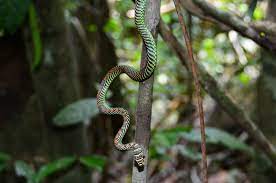
The notion of flying snakes may have originated from observing their extraordinary gliding abilities. Certain species of snakes, such as the paradise tree snake, employ a unique technique known as aerial gliding to move between trees. By using their slender bodies and undulating movements, these snakes can glide through the air for short distances, much like a paper airplane gracefully soaring in the wind.
Although visually similar to flying, it is important to understand the distinction between gliding and true flight. While birds and insects have wings that generate lift and contribute to controlled flight, snakes lack such appendages. Therefore, the aerial movements of these gliding snakes are entirely reliant on the interaction between their body shape, muscle coordination, and the surrounding air currents.
To achieve a successful glide, snakes must first elevate themselves vertically off a perch, assuming an S-shape with their body. This unique posture allows them to create an aerodynamic shape, increasing their surface area and enabling the generation of lift. By adeptly manipulating their muscles and flexing portions of their body, these gliding serpents can control their direction and angle of descent, maneuvering gracefully through the air.
One of the most remarkable abilities of gliding snakes is their capacity to cover significant distances in search of prey or to escape potential predators. Some species have been documented gliding distances of up to 100 feet, exhibiting an extraordinary level of agility and precision. This unique adaptation grants them access to resources situated in adjacent trees or new areas, providing them with a competitive advantage.
However, it is crucial to emphasize that snaking gliding is limited to arboreal environments. Unlike some animals capable of true flight, snakes are bound to the ground when not gliding. Their lack of wings or any other form of mechanism limits their aerial capabilities solely to gliding. Thus, the claim that snakes can fly is fundamentally incorrect.
While debunking the myth of flying snakes, it is equally important to highlight the fascinating diversity within the reptilian world. Snakes have thrived on Earth for millions of years, adapting to a vast array of ecosystems and fulfilling critical roles in various food chains. Their gliding abilities may be astonishing, but they are merely a fraction of what makes these creatures truly extraordinary.
[Conclusion]
As our exploration into the world of snakes comes to an end, we hope to have enlightened you on the myth that has intrigued so many - the belief that snakes can fly. While they can undoubtedly glide gracefully through the air, their lack of wings prevents true flight. As we continue to unravel the mysteries of Mother Nature, let us appreciate the incredible adaptations that snakes possess, reminding us once again that the truth lies in the beauty of reality rather than in the fantasies of the mind. Thank you for joining us on this wild journey and be sure to tune in to our next episode as we uncover even more fascinating aspects of the animal kingdom!