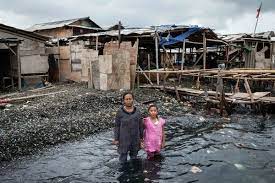
Eps 2: Slum areas in Jakarta
The podcast discusses the issue of slum areas in Jakarta, Indonesia. These slum areas are home to approximately 1.2 million people who face a variety of challenges including poor living conditions, inadequate infrastructure, and high levels of crime and violence. The Indonesian government has tried various approaches to address this issue, but progress has been slow due to factors such as corruption, political instability, and a lack of funding. Some NGOs and grassroots organizations have stepped in to provide support and services to those living in slum areas, but there is still much work to be done to improve the living conditions for these vulnerable communities.
| Seed data: | Link 1 |
|---|---|
| Host image: | StyleGAN neural net |
| Content creation: | GPT-3.5, |
Host

Heather Johnston
Podcast Content
The term slum area typically refers to informal settlements in cities, where people live in makeshift or temporary housing. In Jakarta, slum areas are commonly found in the outskirts of the city, where people live in shanties constructed from scrap material, such as corrugated iron, wood, and plastic sheets.
One of the main reasons for the presence of slum areas in Jakarta is due to rapid urbanization. As rural populations move into the city in search of better economic opportunities, they are often unable to afford housing in the formal sector, leading to the development of slum areas.
Residents living in slum areas face a range of challenges, including limited access to clean water, sanitation, and electricity. Many slum areas lack basic infrastructure, such as paved roads, garbage collection, and sewage systems. This can lead to unsanitary conditions, which can cause an increase in disease and illness.
Another key issue affecting slum areas in Jakarta is poverty. Many of the residents in slum areas are unable to secure stable employment, leading to a lack of income and limited access to basic services. Poverty can also lead to social issues such as crime, which can make living in these areas particularly dangerous.
Despite the challenges faced by residents living in slum areas, local communities and organizations are working to improve living conditions. One example is the work of a non-governmental organization called Urban Poor Consortium, which works with communities in slum areas to provide basic services and infrastructure, such as clean water and sanitation.
In addition to community organizations, there are also government initiatives aimed at improving the lives of slum area residents. One example is the government's Kampung Improvement Program, which aims to improve living conditions in slum areas by providing basic infrastructure and services such as paved roads, drainage systems, and garbage collection.
Overall, the issue of slum areas in Jakarta is complex, and it requires a comprehensive approach to address. While there are challenges, there are also opportunities to improve living conditions and create a more equitable and sustainable future for all residents of Jakarta.