Eps 7: Saint Juan Diego: Visionary of Our Lady of Guadalupe
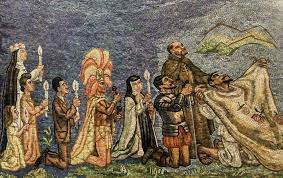
In this 10-minute podcast titled "Saint Juan Diego: Visionary of Our Lady of Guadalupe," the host explores the story of Saint Juan Diego, a significant figure in Mexican Catholicism. Juan Diego is said to have had a vision of the Virgin Mary, who appeared to him as Our Lady of Guadalupe. The host explains that the apparition took place in December 1531, when Juan Diego was walking to church. Our Lady of Guadalupe allegedly spoke to him in his native indigenous language, Nahuatl, asking him to go to the bishop and request the construction of a church in her honor. Initially, the bishop did not believe Juan Diego's account, but Our Lady of Guadalupe visited Juan Diego again and instructed him to gather roses as a sign for the bishop. Juan Diego did as asked, and when he opened his cloak to present the roses to the bishop, an image of the Virgin Mary miraculously appeared on the cloak. This image, known as the tilma, is considered to be sacred and remains venerated to this day. The host highlights the significance of Saint Juan Diego's story, emphasizing how it symbolizes the unifying power of faith and how it has become an integral part of Mexican cultural and religious identity.
| Seed data: | Link 1 |
|---|---|
| Host image: | StyleGAN neural net |
| Content creation: | GPT-3.5, |
Host

Troy Kennedy
Podcast Content
Introduction:
Welcome to today's podcast, where we will be delving into the inspiring life of Saint Juan Diego, the visionary of Our Lady of Guadalupe. This exceptional event holds great significance in the history of Christianity, particularly in Latin America. We will explore the background leading up to the miraculous apparitions, delve into the details of the encounters, and discuss the enduring impact and legacy of Saint Juan Diego.
Background:
To understand the significance of Saint Juan Diego's encounters, it is essential to grasp the backdrop against which they occurred. The visionary events transpired in the 16th century, a mere decade after the arrival of Spanish conquistadors in Mexico. The indigenous population, previously adhering to their native traditions and beliefs, were confronted with a new religion - Christianity.
Encounters with Our Lady of Guadalupe:
Juan Diego, an indigenous Aztec peasant, experienced a series of extraordinary encounters with the Virgin Mary between December 9 and December 12, 1531. The first apparition took place on the Hill of Tepeyac, a sacred site for the indigenous people. On that day, Juan Diego saw a young woman who spoke to him in his native language, Nahuatl. She revealed herself as the Virgin Mary and instructed him to convey a message to the Catholic bishop in Mexico City.
Despite initial skepticism, Juan Diego obeyed Mary's instructions and pleaded with the bishop to build a church on the Hill of Tepeyac. The bishop, however, requested a sign to verify the authenticity of Juan Diego's claim. In response to this request, the Virgin Mary reappeared to Juan Diego and instructed him to gather flowers from the hill despite the winter season. When Juan Diego presented the bouquet of Castilian roses to the bishop, a miraculous image of the Virgin Mary was revealed on his tilma, or cloak. This image, known as Our Lady of Guadalupe, remains one of the most revered religious symbols in Latin America.
Impact and Legacy:
The apparitions of Our Lady of Guadalupe had a profound impact on both the indigenous people and the Spanish conquerors. The native population found solace in the Virgin Mary's appearance, as she presented herself as their protector and intercessor. This connection to their own culture and language provided a bridge between their ancestral beliefs and the introduction of Christianity. Consequently, the conversion of millions of indigenous people to Catholicism was expedited.
The image of Our Lady of Guadalupe, imprinted on Juan Diego's tilma, became a potent symbol of hope, faith, and unity for both the Mexican people and the Catholic Church. The miraculous nature of the image - which has remained intact for over 500 years, despite exposure to harsh weather conditions and attempts at destruction - has steeped it in religious significance. To this day, millions of pilgrims flock to the Basilica of Our Lady of Guadalupe in Mexico City, where the tilma is displayed, seeking spiritual solace and inspiration.
Conclusion:
The life of Saint Juan Diego exemplifies the profound impact one person's faith and dedication can have on an entire community. His encounters with the Virgin Mary, resulting in the miraculous creation of the image of Our Lady of Guadalupe, transformed the spiritual landscape of Latin America. Saint Juan Diego's legacy endures, serving as a reminder of the power of divine intervention and the enduring connections between faith, culture, and spirituality.