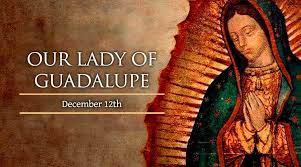
Eps 1: Our Lady of Guadalupe December 12, 1531
— The Mexican Marian Apparition Podcast
In the podcast episode titled "Our Lady of Guadalupe December 12, 1531," the story of the appearance of the Virgin Mary to Juan Diego in Mexico in 1531 is discussed. The narrator explains how the event unfolded when Juan Diego encountered a beautiful woman who identified herself as the Virgin Mary and asked him to build a church in her honor. The skeptical bishop demanded proof of Juan Diego's encounter, and the Virgin Mary instructed him to gather flowers from a barren hilltop in winter. Miraculously, Juan Diego found blooming roses, and when he presented them to the bishop, an image of the Virgin Mary appeared on his cloak, now known as the miraculous image of Our Lady of Guadalupe. The narrator discusses the significant impact of this event on Mexican history, culture, and spirituality, highlighting the millions of pilgrims who flock to the Basilica of Guadalupe every year to pay homage to the Virgin Mary. The podcast concludes with a reflection on the enduring significance of Our Lady of Guadalupe's message of compassion, unity, and love.
| Seed data: | Link 1 |
|---|---|
| Host image: | StyleGAN neural net |
| Content creation: | GPT-3.5, |
Host

Suzanne Arnold
Podcast Content
Welcome to today's podcast episode titled "Our Lady of Guadalupe, December 12, 1531." In this episode, we will delve into the remarkable story of the apparition of the Virgin Mary to a humble indigenous peasant, Juan Diego, in what is now Mexico. This event, known as the apparition of Our Lady of Guadalupe, has become one of the most significant and widely celebrated religious experiences in the world. Join us as we explore the historical context, the message conveyed, and the lasting impact of this extraordinary event.
Historical Context:
The year was 1531, a time when Mexico was under Spanish colonial rule. The indigenous population, who had been living on this land for centuries, faced marginalization and suppression under foreign dominion. Against this backdrop of cultural and religious tension, the apparition of Our Lady of Guadalupe emerged, forever changing the course of Mexican history.
The Apparitions:
On December 9, 1531, Juan Diego, a humble Aztec peasant, was walking near Tepeyac Hill, just outside of Mexico City. Suddenly, he witnessed a radiant vision of a young woman who introduced herself as the Virgin Mary. She spoke to him in his native Nahuatl language, expressing a divine mission for him.
The Virgin Mary urged Juan Diego to go to the bishop and request that a chapel be built in her honor on the very spot where she appeared. Juan Diego dutifully obeyed but faced skepticism from the bishop, who requested a miraculous sign to confirm the authenticity of the apparition.
The Miraculous Sign:
On December 12, 1531, Juan Diego encountered the Virgin Mary for the fourth time, conveying the bishop's request for a sign. The Virgin instructed Juan Diego to gather flowers from the top of the usually barren Tepeyac Hill, despite it being winter.
Miraculously, Juan Diego found an abundance of vibrant Castilian roses, not native to Mexico. He carefully gathered them in his tilma (a cloak made of cactus fiber), and as he presented them to the bishop, an astonishing image of the Virgin Mary was imprinted on the fabric.
The Message:
The apparition of Our Lady of Guadalupe bore a powerful message of unity and love. Mary presented herself as the mother of all people, transcending cultural and ethnic boundaries. Her appearance to an indigenous peasant was a profound affirmation of the worth and dignity of the native population, rekindling their sense of identity and pride during a time of hardship.
Furthermore, the miraculous image conveyed a message of religious syncretism. The image merged native Aztec symbolism with Christian elements, representing a harmonious fusion of two cultures. This blending was instrumental in facilitating the conversion of millions of indigenous people to Christianity, as they could recognize their own customs and beliefs within the framework of the new faith.
Lasting Impact:
The impact of the apparition was immediate and enduring. The chapel requested by the Virgin Mary was soon built on the Hill of Tepeyac, becoming a pilgrimage site drawing millions of visitors annually. Our Lady of Guadalupe became the patroness of Mexico, invoked as a source of comfort, hope, and intercession in times of both personal and national crises.
Moreover, the image of Our Lady of Guadalupe has become a potent symbol of Mexican identity and unity. The story of Juan Diego and the Virgin Mary highlights the resilience and strength of the Mexican people, instilling a profound sense of pride and cultural belonging.
Conclusion:
The apparition of Our Lady of Guadalupe on December 12, 1531, stands as a testament to the power of faith, the bridge between cultures, and the importance of recognizing the dignity and worth of all individuals. The story of Juan Diego and the miraculous image imprinted on his tilma continues to inspire millions around the world, reminding us of the enduring presence of the divine in our lives. As we reflect on this remarkable event, let us embrace the spirit of unity, love, and tolerance that Our Lady of Guadalupe symbolizes, spreading it beyond borders and drawing strength from our shared humanity.