Eps 8: Our Lady of Guadalupe and the Apparitions of Juan Diego
— The Moments About the Virgin Mary in the Role as the Mother of God
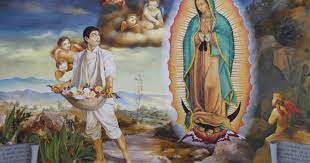
In a 10-minute podcast titled "Our Lady of Guadalupe and the Apparitions of Juan Diego," the story of the apparitions of Juan Diego and the significance of Our Lady of Guadalupe are discussed. The podcast starts by explaining that in 1531, a series of apparitions took place in Mexico where the Virgin Mary appeared to a humble indigenous man named Juan Diego. According to the accounts, Mary asked Juan Diego to go to the bishop and request the construction of a temple in her honor on the Hill of Tepeyac, where she appeared to him. Initially, the bishop did not believe Juan Diego's story and asked for a sign. In response, Mary instructed Juan Diego to gather flowers from the hill, despite it being winter and not suitable for any blooms. When Juan Diego opened his cloak, revealing the flowers, a miraculous image of Mary appeared on the fabric. This image of Mary, known as Our Lady of Guadalupe, has since become one of the most important religious symbols in Mexico and is considered a powerful representation of the Catholic faith. The podcast highlights the impact that Our Lady of Guadalupe has had on Mexican culture, becoming a unifying figure for both indigenous people and the Catholic Church. The significance of the apparitions and the image of Our Lady of Guadalupe is explored in the podcast. It is emphasized that Mary's choice to appear to an indigenous man like Juan Diego rather than a member of the Spanish colonizers was significant. This led to a blending of indigenous beliefs with Catholicism, contributing to the conversion of millions of indigenous people to Christianity. In conclusion, the podcast provides a brief overview of the apparitions of Juan Diego and the significance of Our Lady of Guadalupe. It highlights the impact that these events have had on Mexican culture, uniting people from different backgrounds through faith.
| Seed data: | Link 1 |
|---|---|
| Host image: | StyleGAN neural net |
| Content creation: | GPT-3.5, |
Host

Melanie Wagner
Podcast Content
Introduction:
In the heartland of Mexico, lies a story steeped in history, faith, and miraculous encounters. The story of Our Lady of Guadalupe, and her apparitions to a humble indigenous man named Juan Diego, has captured the hearts and souls of millions around the world. This podcast delves into the fascinating tale of the apparitions, the significance of the symbolism surrounding the Lady, and the enduring legacy of faith that continues to inspire people to this day.
The Apparitions:
It all began on a chilly December morning in 1531 when the Virgin Mary appeared to Juan Diego, an Aztec convert to Christianity, on the barren hill of Tepeyac. She spoke to him in his native tongue, Nahuatl, and identified herself as the "ever-perfect Holy Mary, who has the honor to be the mother of the true God."
During this first encounter, the Virgin Mary conveyed her desire for a basilica to be built on the site of her apparitions. She instructed Juan Diego to relay this message to the local bishop, Juan de Zumárraga. However, the skeptical bishop requested a sign as proof.
The Miraculous Roses and Image:
Undeterred, Juan Diego returned to the hill, where the Virgin Mary once again appeared to him. She instructed him to gather roses from the usually desolate terrain and place them in his cloak. Juan Diego did as he was told, and when he unraveled his cloak to present the roses to the bishop, a miraculous image of the Virgin Mary was imprinted on the fabric.
This image, now known as the "Virgin of Guadalupe," is one of the most revered and analyzed religious symbols in the world. Its composition, with the young Indigenous woman cloaked in the sun, standing atop a crescent moon, quickly became a powerful representation of the merging of pre-Hispanic beliefs with Catholicism. The image seemed to be a visual bridge between the conquerors and the conquered, fostering a sense of unity and healing.
Spiritual Significance:
Beyond its historical and cultural importance, the apparition of Our Lady of Guadalupe played a crucial role in the evangelization of Mexico. It is believed that up to nine million Indigenous people converted to Christianity within a decade of these miraculous events. The image acted as a unifying force, drawing people from all walks of life to seek solace, hope, and the embrace of faith.
The story of Our Lady of Guadalupe transcends time and borders, captivating hearts across generations and continents. Pilgrims from around the world journey to the Basilica of Guadalupe, built on the site Juan Diego encountered the Virgin Mary, to pay tribute and seek her intercession.
Enduring Legacy:
The apparitions of Juan Diego and the miraculous image of the Virgin of Guadalupe continue to hold immense significance in the lives of millions of individuals. Our Lady of Guadalupe is widely venerated as the patroness of the Americas and a powerful advocate for those in need. Her story serves as a reminder of the power of faith, redemption, and the profound interconnections between diverse cultures and religious beliefs.
Conclusion:
The story of Our Lady of Guadalupe and the apparitions to Juan Diego is an extraordinary tale that has inspired and touched the lives of countless individuals. From the humble beginnings of a man seeking to fulfill the Virgin Mary's request for a temple, to the conversion of millions and the construction of the magnificent Basilica of Guadalupe, this story exemplifies the ever-present nature of spirituality in the world.
The image of the Virgin of Guadalupe continues to be a symbol of faith, unity, and hope for those who seek solace and guidance. The story of Juan Diego and Our Lady of Guadalupe invites us to reflect on our own beliefs and to open our hearts to the possibility of encountering the divine in our own lives. As we delve deeper into this remarkable story, we gain a greater appreciation for the enduring legacy and spiritual impact that Our Lady of Guadalupe and the apparitions of Juan Diego have left on the world.