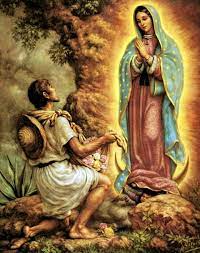
Eps 20: On 1531, the Apparitions of Our Lady of Guadalupe
In a 10-minute podcast titled "On 1531, the Apparitions of Our Lady of Guadalupe," the speaker discusses the significant events surrounding the apparitions of Our Lady of Guadalupe in 1531. The podcast explores the historical context and the impact of these apparitions on the indigenous people of Mexico. The speaker initially provides background information on Mexico in the 16th century, a time marked by the Spanish conquest and the imposition of Catholicism upon the indigenous population. Against this backdrop, the apparitions of Our Lady of Guadalupe took place. According to the podcast, on December 9, 1531, an indigenous man named Juan Diego encountered a vision of a young woman on Tepeyac Hill, near present-day Mexico City. The woman identified herself as the Virgin Mary and instructed Juan Diego to build a church at the site. However, Juan Diego's claims were initially met with skepticism by the Catholic authorities. The podcast describes the turning point in the story when Juan Diego returned to the hill and the Virgin Mary miraculously imprinted her image on his tilma (cloak). This event convinced the Church to believe in the authenticity of Juan Diego's accounts and to fulfill the request to construct a church. As the podcast explains, the apparitions of Our Lady of Guadalupe had a significant impact on the indigenous people of Mexico. The Virgin Mary's appearance to Juan Diego was seen as a validation of their identity and an affirmation of their spiritual worth. It provided them with a new sense of hope and served as a bridge between their indigenous beliefs and the Catholic faith imposed upon them by the Spanish. Furthermore, the speaker highlights the enduring importance of Our Lady of Guadalupe in Mexican culture. The image of the Virgin Mary on Juan Diego's tilma became an object of veneration and pilgrimage for countless believers. Her iconic representation became a symbol of Mexican identity, faith, and unity. In conclusion, the podcast explores the historical events surrounding the apparitions of Our Lady of Guadalupe in 1531. It discusses the impact of these apparitions on the indigenous people of Mexico, emphasizing their significance in bridging indigenous beliefs with Catholicism and the enduring cultural importance of the Virgin Mary's image on Juan Diego's tilma.
| Seed data: | Link 1 |
|---|---|
| Host image: | StyleGAN neural net |
| Content creation: | GPT-3.5, |
Host

Brandie Carter
Podcast Content
The first apparition of Our Lady of Guadalupe occurred on December 9, 1531, when Juan Diego was walking near the Hill of Tepeyac in what is now Mexico City. He suddenly saw a radiant woman who identified herself as the Virgin Mary and asked him to build a church in her honor at that very spot. Despite his initial doubts, Juan Diego agreed to her request and went to the local bishop to relay the message. However, the bishop was skeptical and asked for a sign to prove the veracity of Juan Diego's claims.
Undeterred, Juan Diego returned to the Virgin Mary and explained the bishop's request. She instructed him to gather roses from the normally barren hillside and present them to the bishop as a sign. Juan Diego was amazed to find Castilian roses blooming on the hill, which he gathered in his cloak, or "tilma," and brought to the bishop. When Juan Diego unfolded his cloak before the bishop, the roses fell to the ground, revealing an image of the Virgin Mary imprinted on the fabric.
The image on the tilma, known as the "Guadalupe Image," is said to possess miraculous qualities and has been the subject of intense study and veneration over the centuries. The image shows a young indigenous woman with almond-shaped eyes, dressed in traditional Aztec attire and surrounded by rays of light. It is considered by many to be a powerful symbol of unity between the Spanish colonizers and the indigenous peoples of Mexico, as well as a testament to the power of faith and the divine.
The significance of the Apparitions of Our Lady of Guadalupe extends far beyond the realm of religion, as they have had a profound impact on Mexican culture, identity, and history. The tilma of Juan Diego with the image of the Virgin Mary has become a symbol of Mexican national pride and unity, and millions of pilgrims flock to the Basilica of Our Lady of Guadalupe in Mexico City every year to pay homage to the miraculous image.
In addition to its cultural importance, the story of Our Lady of Guadalupe has also sparked debates among historians, theologians, and skeptics about the nature of miracles, the existence of divine intervention, and the complexities of faith and belief. Some view the apparitions as a genuine supernatural event that defies rational explanation, while others attribute the image on the tilma to natural causes or artistic ingenuity.
Regardless of one's perspective, the Apparitions of Our Lady of Guadalupe continue to inspire awe and wonder in those who encounter the story. The enduring power of this miraculous event lies in its ability to transcend cultural, religious, and historical boundaries, uniting people from all walks of life in a shared sense of wonder and reverence.
As we reflect on the profound impact of the Apparitions of Our Lady of Guadalupe, let us remember the words of the Virgin Mary to Juan Diego: "Am I not here, who am your Mother? Are you not under my shadow and protection?" May we all find comfort and solace in the presence of the Divine Mother, who continues to watch over us with love and compassion, now and always. Thank you for listening to today's podcast episode.