Eps 1: methods in python
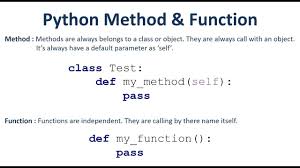
The podcast discusses various methods in Python, focusing primarily on built-in functions, instance methods, class methods, and static methods. Built-in functions are versatile and come with Python, helping perform basic operations. Instance methods are functions defined within a class and operate on an instance of the class. Class methods, marked with the `@classmethod` decorator, operate on the class itself rather than an instance and are often used for factory methods. Static methods, marked with the `@staticmethod` decorator, do not operate on an instance or class and can be used for utility functions. The podcast highlights practical examples for each method type to illustrate how and when to use them effectively.
| Seed data: | Link 1 |
|---|---|
| Host image: | StyleGAN neural net |
| Content creation: | GPT-3.5, |
Host

Nicole Gonzalez
Podcast Content
```python
class Dog:
def __init__(self, name, age):
self.name = name
self.age = age
def bark(self):
return f"{self.name} says woof!"
def get_human_years(self):
return self.age * 7
```
In this example, the `__init__` method is a special method called a constructor, which initializes the object's state. Two other methods, `bark()` and `get_human_years()`, are defined to exemplify how methods can perform actions (bark) and return transformed data (calculate dog's age in human years).
To call these methods, you first need to create an instance of the Dog class:
```python
my_dog = Dog("Buddy", 4)
print(my_dog.bark()) # Output: Buddy says woof!
print(my_dog.get_human_years()) # Output: 28
```
Another type of method in Python is the class method, which is defined using the `@classmethod` decorator:
```python
class Dog:
species = "Canis familiaris"
def __init__(self, name, age):
self.name = name
self.age = age
@classmethod
def get_species(cls):
return cls.species
```
Here, the `get_species()` method is a class method and it does not require an instance to be called. Instead, it takes the `cls` parameter which refers to the class itself. It can be called using the class name:
```python
print(Dog.get_species()) # Output: Canis familiaris
```
Similarly, static methods, defined using the `@staticmethod` decorator, do not access class or instance-specific data. They behave like plain functions but belong to the class's namespace:
```python
class MathUtils:
@staticmethod
def add(x, y):
return x + y
print(MathUtils.add(5, 3)) # Output: 8
```
Methods also allows for encapsulation, an object-oriented programming principle that helps to hide the internal state of an object. By defining private methods, denoted by a leading underscore, you ensure that they are not meant to be accessed directly:
```python
class BankAccount:
def __init__(self, balance):
self.__balance = balance
def deposit(self, amount):
self.__balance += amount
def __log_transaction(self, amount):
print(f"Transaction of {amount} completed.")
```
In this scenario, `__log_transaction` is a private method, meaning it's intended to be used only inside the class and not accessed externally. However, keep in mind that Python does not enforce strict access control.
Understanding and utilizing these different types of methods efficiently can help you write more organized, readable, and maintainable code.