Eps 4: Medieval Punishments That Still Exist Today
The podcast discusses how certain medieval punishments have persisted into modern times, albeit in evolved or disguised forms. It highlights how practices like public shaming, flogging, and solitary confinement were common in the medieval period and have contemporary equivalents. Public shaming now occurs through social media and cyberbullying, while physical punishments like caning are still used in some countries. Solitary confinement, used historically for penitence, remains a controversial practice in modern prisons. The continuity of these punishments reflects societal challenges in balancing justice, deterrence, and human rights.
| Seed data: | Link 1 |
|---|---|
| Host image: | StyleGAN neural net |
| Content creation: | GPT-3.5, |
Host

Tom Shelton
Podcast Content
Perhaps the most controversial continuation is the practice of amputation for theft, a punishment that has biblical as well as medieval roots. Some legal systems, particularly under certain interpretations of Sharia law, still implement this severe penalty. Branding, once utilized as a permanent mark of criminal status, finds its modern-day parallel in the lasting stain of a criminal record that can permanently impede one’s societal reintegration and opportunities for employment. Further, exile or banishment as a form of punishment may seem like an artifact of another era, yet in practice, modern forms of deportation and restraining orders serve a similar function of removing an individual from a certain territory or community.
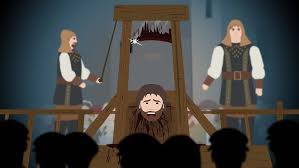
Even the gallows have their modern equivalents in the form of hanging within certain jurisdictions worldwide that still practice the death penalty. Let’s not overlook the medieval practice of trial by ordeal, where guilt or innocence was determined by subjecting the accused to painful or dangerous tests. In a more psychological form, we see remnants of this today when lie detector tests are controversially used despite their questionable reliability, putting individuals through a different kind of ordeal to ascertain truth. Last but not least, while outright public executions are largely a thing of the past, their core principle endures in societies still carrying out capital punishment with the intent of public deterrence, often discreetly veiled under modern judicial processes.
Therefore, while we have made considerable progress in human rights and justice reform, echoes of the past resonate in various forms and practices that persist into the present, reminding us that the wheel of justice, albeit modernized, often turns on ancient spokes.