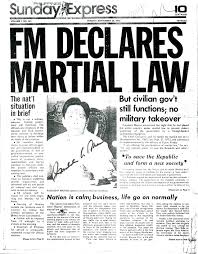
Eps 4: Martial Law in the Philippimes
The podcast discusses the recent implementation of martial law in the Philippines by President Rodrigo Duterte in response to increasing violence and terrorism in the country, particularly in the city of Marawi. There are concerns about the potential abuses of power that may occur under martial law, as well as the impact it may have on the citizens of the Philippines. The podcast also explores the history of martial law in the Philippines, including its use by former dictator Ferdinand Marcos during his regime. Overall, the situation is complex and raises many questions about the balance between security and human rights.
| Seed data: | Link 1 |
|---|---|
| Host image: | StyleGAN neural net |
| Content creation: | GPT-3.5, |
Host

Sonia Duncan
Podcast Content
During this period, the Philippines saw a dramatic increase in human rights violations, political repression, censorship, and corruption. The media was heavily controlled and critical voices were silenced, with journalists, activists, and political opponents being arrested, tortured, and even killed. The regime of Martial Law also led to the displacement of thousands of Filipinos who were forced to flee their homes and live in fear of the military and police.
One of the most notorious legacies of Martial Law was the creation of the infamous “Marcos regime” , which used Martial Law to consolidate power and enrich themselves at the expense of the Filipino people. The Marcos family amassed a vast fortune through embezzlement and corruption, while the country sank deeper into debt and economic stagnation. The blatant abuse of power and rampant human rights violations under Martial Law created a climate of fear and distrust that lasted long after the regime was overthrown.
In 1986, a peaceful revolution known as the EDSA People Power Revolution successfully ousted Marcos from power and restored democracy to the Philippines. The years that followed witnessed attempts to hold the Marcoses accountable for their crimes during Martial Law, including the recovery of ill-gotten wealth and the prosecution of human rights abusers. However, the legacy of Martial Law continues to loom large over the Philippines, with many still grappling with the trauma and scars left by that dark period in history.
Fast forward to the present day, some Filipinos fear that the specter of Martial Law may be returning under the current administration of President Rodrigo Duterte. While Duterte has not officially declared Martial Law, he has declared a state of emergency in some regions of the country, citing the threat of terrorism and drug trafficking as justification for increased military presence and police powers. Critics argue that these measures are reminiscent of the tactics used during Martial Law, and warn of a slide back into authoritarianism.
The debate over the possibility of Martial Law being declared once again in the Philippines is a contentious and sensitive issue that continues to divide the nation. Proponents of strong government action argue that Martial Law is necessary to maintain law and order, while opponents argue that it is a slippery slope that leads to the erosion of civil liberties and the abuse of power. The lessons of history serve as a cautionary tale, reminding us of the dangers of unchecked authority and the importance of vigilance in protecting democracy and human rights.
As we reflect on the dark legacy of Martial Law in the Philippines, we are reminded of the sacrifices made by those who fought for justice, freedom, and democracy. The wounds of the past may never fully heal, but they serve as a stark reminder of the importance of remaining vigilant and steadfast in the face of authoritarianism. The struggle for democracy and human rights is an ongoing one, and the lessons of Martial Law must never be forgotten.