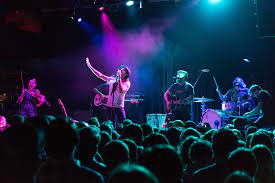
Eps 1: Lived Music
The podcast discusses the difference between recorded music and live music. The host argues that live music offers a visceral, emotional experience that cannot be replicated by recordings. Live music creates a shared, communal experience that brings people together in a unique way. It allows for spontaneity, improvisation, and connection between musicians and audience members. The host also explores how technology and social media have impacted the experience of live music, giving people new ways to participate and engage, but also potentially diluting the power and intimacy of the live performance.
| Seed data: | Link 1 |
|---|---|
| Host image: | StyleGAN neural net |
| Content creation: | GPT-3.5, |
Host

Lee Franklin
Podcast Content
Music is an integral part of human life, and it has been for as long as people have been able to create sound and rhythm. The power of music is undeniable, and it can move us in ways that words alone cannot. Music is not just something we listen to; it’s something we feel, something we experience. In this podcast, we explore the concept of “lived music” – music that is not just a passive experience, but something that we actively engage with and participate in.
The Evolution of Music:
Music has been a part of human society for thousands of years, and it has evolved and changed along with us. Early music was often used in religious ceremonies and celebrations, and it was created using simple instruments such as drums, flutes and stringed instruments.
As societies became more complex, so did their music. The invention of musical notation allowed for the creation of more intricate and complex pieces of music, and the development of new instruments like the piano, violin and saxophone added new dimensions to music.
In the 20th century, the advent of recording technology changed the way we consume music. Instead of experiencing music in a live setting, we could now listen to it on demand, whenever we wanted. But this convenience came at a cost – we lost some of the immediacy and intimacy that comes from experiencing music live.
The Power of Live Music:
There’s something special about experiencing music live. When we attend a live concert or performance, we become a part of something larger than ourselves. We connect with the music in a way that is impossible through headphones or speakers alone.
Live music is also a communal experience. When we attend a concert, we are surrounded by other people who share our love of music. We clap, sing along, and dance together, creating a sense of community and belonging.
The Benefits of Participating in Live Music:
Participating in live music – whether as a performer or as an audience member – has a number of benefits. For performers, it can be a way to express themselves creatively and connect with others. It can also be a source of personal fulfillment and satisfaction.
For audience members, live music can be a way to experience new cultures and connect with others. It can also be a source of stress relief and relaxation. Listening to music has been shown to reduce levels of the stress hormone cortisol, which can have a positive impact on our mental and physical health.
Conclusion:
In conclusion, music is not just something we listen to – it’s something we experience and participate in. Live music has a power and intimacy that is impossible to replicate through recordings alone. Whether we are performers or audience members, participating in live music can enrich our lives in countless ways. So next time you have the opportunity to attend a live concert or performance, take it – you never know what kind of impact it might have on you.