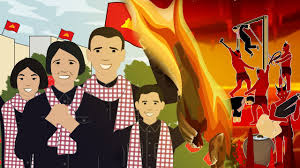
Eps 2: Life Under The Most Evil Communist Regime Khmer Rouge
The podcast discusses the harrowing experiences of individuals who lived under the Khmer Rouge regime in Cambodia. It highlights the extreme measures taken by the regime to control and oppress the population, including forced evacuations, brutal labor camps, and severe restrictions on personal freedoms. The regime's tactics of surveillance, indoctrination, and violence created an atmosphere of constant fear and suspicion. Personal stories reveal the profound psychological and physical suffering endured by those who survived, shedding light on the resilience and strength of the human spirit amidst one of the most oppressive regimes in history.
| Seed data: | Link 1 |
|---|---|
| Host image: | StyleGAN neural net |
| Content creation: | GPT-3.5, |
Host

Sean Brown
Podcast Content
The regime abolished money, schools, private property, and religion, decreeing that all citizens were to work as laborers in one enormous collective. Families were torn apart—children separated from parents, siblings from one another—as everyone was assigned to labor camps. "Angkar," the faceless, omnipotent organization that was the Khmer Rouge government, demanded absolute obedience. Every move was monitored; even a whisper could be reported. Hospitals were rendered useless, and trained medical professionals were executed, leaving countless people to suffer and die from treatable diseases.
Starvation became rampant as rice, an essential staple, was exported in large quantities, leaving insufficient amounts for the population. Execution sites, known as the Killing Fields, were scattered across the country. Intellectuals, professionals, and perceived dissenters were targeted first. Often, these individuals were tortured before being murdered in brutal, inhumane ways. Children were indoctrinated into the regime’s ideology, encouraged to spy on their parents and peers. Propaganda was pervasive, creating an environment where trust was nonexistent, and survival often required betraying one’s morals and loved ones.
In these years, almost two million Cambodians died due to execution, forced labor, and starvation, a staggering number that reflects the utter devastation wrought by the regime. Life was stripped down to its barest form, mere survival, in an everyday atmosphere of existential dread. Escaping this living hell was nearly impossible, as armed guards patrolled the borders and any attempts to flee were deadly. Even after the fall of the Khmer Rouge, the country remained scarred, with a population that had been deeply traumatized by the unimaginable suffering it had endured.
Those who lived through this period often carried visible and invisible scars, haunted by the memories of relentless cruelty and loss. The Khmer Rouge's legacy is a somber reminder of humanity's potential for evil, a stark history lesson on the dangers of unchecked power fueled by ideology over compassion and reason. This chapter in Cambodian history remains among the most tragic episodes of the 20th century, a time when life was dictated by an unforgiving and merciless regime.