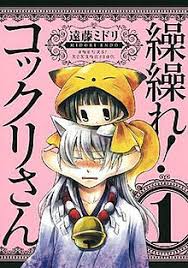
Eps 10: Kokkuri San Japanese urban legend
— Scary
"Kokkuri San" is a Japanese urban legend involving a game similar to a Ouija board. Participants use a coin and a piece of paper with letters and symbols to summon the spirit of Kokkuri, said to be a fox, dog, or raccoon spirit. The spirit answers questions by moving the coin. Originally popular in the Meiji era, Kokkuri San remains a cultural phenomenon, often associated with supernatural and eerie outcomes. Despite being viewed as a harmless schoolyard game, there are warnings and superstitions about potential dangers and negative consequences of playing with the spirit.
| Seed data: | Link 1 |
|---|---|
| Host image: | StyleGAN neural net |
| Content creation: | GPT-3.5, |
Host

Gertrude Boyd
Podcast Content
Participants typically seek answers to personal questions, receiving responses that can range from mundane to terrifyingly precise. Despite its playful appearance, Kokkuri-san comes with a set of strict rules meant to protect players from any negative consequences. Players must always ask Kokkuri-san for permission to end the game, properly dispose of the paper, and in some traditions, break the coin to severe any spiritual connections. Failing to follow these rules reportedly invites bad luck or even malevolent hauntings.
One of the most disturbing aspects of Kokkuri-san is the real-life anecdotes that bring the legend to life. There are countless stories of students asking about their futures, only to receive ominous predictions that later come true. In more extreme cases, there have been reports of participants experiencing fits of paranoia and hearing disembodied voices. Episodes of what some describe as possession have also been linked to the game.
Skeptics argue that the movement of the coin is a result of the ideomotor effect, where small, unconscious muscle movements cause the object to move. However, even if psychological explanations suffice for some, the game’s cultural baggage and the eerie coincidences it can produce make it a deeply unsettling experience in Japan.
Kokkuri-san serves as an intersection between psychological phenomena and cultural beliefs, straddling the line between a harmless pastime and a risky dalliance with the supernatural. The very act of engaging with Kokkuri-san can be seen as a modern ritual that connects younger generations to ancient Japanese spiritual traditions. Whether approached with curiosity or dread, Kokkuri-san remains a compelling example of how folklore adapts and thrives in contemporary society, continuing to capture the imagination—and sometimes fear—of those who dare to play.