Host

Dianne Douglas
Podcast Content
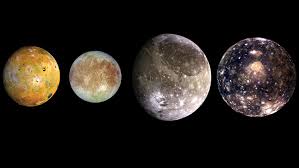
One of the most well-known moons of Jupiter is Europa, which has captured the imagination of scientists and science fiction enthusiasts alike. Europa is believed to have a subsurface ocean beneath its icy crust, making it a prime candidate for the search for extraterrestrial life. The presence of liquid water on Europa has sparked interest in exploring this moon further in search of potential habitats for life beyond Earth.
Another intriguing moon of Jupiter is Io, known for its volcanic activity and colorful surface features. Io's active volcanoes constantly reshape its surface, creating a dynamic environment that is unlike any other moon in our solar system. The intense volcanic activity on Io is driven by the gravitational forces exerted by Jupiter and the other moons, making it a fascinating case study in planetary dynamics.
Ganymede, the largest moon of Jupiter, is another moon of interest due to its status as the only moon in our solar system known to have its own magnetic field. Ganymede's magnetic field is believed to be generated by a liquid iron core, much like Earth's magnetic field. This unique characteristic has led scientists to study Ganymede in order to better understand the processes that govern the formation and maintenance of magnetic fields on rocky bodies.
Callisto, the outermost of the four Galilean moons of Jupiter, is a heavily cratered moon that provides insight into the history of our solar system. The impact craters on Callisto's surface record the bombardment of asteroids and comets that occurred during the early days of the solar system, providing valuable information about the formation and evolution of the planets and their moons.
Beyond the Galilean moons, Jupiter boasts a diverse collection of smaller moons that offer their own unique insights into the workings of our solar system. These moons range in size from large bodies like Himalia and Amalthea to tiny irregular moons that orbit far from Jupiter's equator. Each of these moons has its own story to tell, shedding light on the complex interactions that shape the moons and planets in our solar system.
In conclusion, Jupiter's moons offer a wealth of opportunities for exploration and discovery. From the potential for life on Europa to the volcanic activity on Io, each moon provides valuable insights into the workings of our solar system and the broader universe beyond. As we continue to study and explore Jupiter's moons, we will undoubtedly uncover new mysteries and deepen our understanding of the complex relationships that govern the celestial bodies in our cosmic neighborhood. Thank you for tuning in to our podcast on Jupiter's moons – we hope you've enjoyed this deep dive into the wonders of our solar system's largest planet and its many moons.