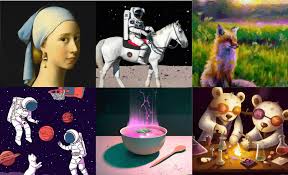
Eps 1: Implementation of DALLE and GPT 3
— Dev test
The podcast discusses the integration and utilization of DALLE and GPT-3 in various applications. DALLE, an AI model that generates images from textual descriptions, is highlighted for its creative potential in areas like digital art and advertising. GPT-3, known for its language processing capabilities, is examined for its uses in drafting content, customer service automation, and improving human-computer interaction. The conversation covers the technical challenges faced during implementation, such as the need for extensive computational resources and the importance of fine-tuning models for specific tasks. Ethical considerations, including addressing biases and ensuring responsible usage, are also emphasized. Through these implementations, the potential for both models to significantly enhance creative and functional tasks in multiple industries is underscored.
| Seed data: | Link 1 |
|---|---|
| Host image: | StyleGAN neural net |
| Content creation: | GPT-3.5, |
Host

Katherine Edwards
Podcast Content
On the other hand, GPT-3, also from OpenAI, focuses on generating human-like text based on the input it receives. Its ability to comprehend and generate coherent, contextually relevant content has myriad applications. For instance, in content creation, GPT-3 can draft articles, generate marketing copy, or even assist in writing code, making it an invaluable tool for professionals seeking to enhance productivity. It also shines in customer service, where it can handle queries and provide information through chatbots, making interactions more efficient and timely.
Combining DALLE and GPT-3 opens new avenues for innovation. Imagine a scenario where a marketing team uses GPT-3 to draft a comprehensive campaign script, and simultaneously, DALLE generates all the associated visual assets. This symbiotic implementation can dramatically cut down the time and resources traditionally required, leading to faster project turnarounds and a seamless integration of visual and textual content.
Moreover, in education, these tools can transform how information is delivered. Educators can use GPT-3 to generate customized lesson plans and explanations tailored to different learning styles, while DALLE can create illustrative examples that cater to visual learners. This personalized approach can enhance comprehension and retention, making learning more engaging and effective.
In the realm of entertainment, writers and designers are starting to explore the potential of these AI models to storyboard ideas, write scripts, and visualize scenes before any physical production begins. This not only brings down costs but also allows for a more iterative and creative process, where ideas can be easily modified and visualized in real-time.
Overall, the implementation of DALLE and GPT-3 symbolizes a significant leap forward in leveraging AI for practical and creative applications. It underscores a future where human creativity and AI ingenuity work hand in hand to break barriers and push the boundaries of what's possible. As these technologies continue to evolve, their potential applications will undoubtedly expand, ushering in a new era of innovation across various industries.