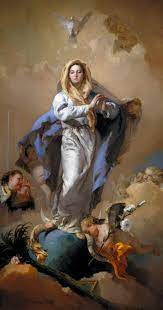
Eps 4: Immaculate Conception of Mary
The podcast episode titled "Immaculate Conception of Mary" explores the concept of the Immaculate Conception in Christian theology. The host explains that the Immaculate Conception refers to the belief that Mary, the mother of Jesus, was conceived without original sin. However, it is important to note that this belief does not refer to the virgin birth itself. The host delves into the historical development of the Immaculate Conception doctrine, tracing its roots to early Christian writings. He explains that this belief gained significant traction in the Middle Ages and was finally defined as a dogma by Pope Pius IX in 1854. Throughout the episode, the host discusses various interpretations and debates surrounding the Immaculate Conception. He mentions that some theologians argue for a traditional understanding of the Virgin Mary's sinlessness from birth, while others propose a more symbolic interpretation, emphasizing Mary's unique role in salvation history. Furthermore, the host addresses the misconceptions surrounding the Immaculate Conception, such as the confusion with the virgin birth or the belief that it refers to the conception of Jesus instead of Mary. He clarifies that the Immaculate Conception solely pertains to Mary's conception. In conclusion, the podcast episode delves into the Immaculate Conception of Mary, providing historical context, different interpretations, and clarifying common misconceptions.
| Seed data: | Link 1 |
|---|---|
| Host image: | StyleGAN neural net |
| Content creation: | GPT-3.5, |
Host

Michele Franklin
Podcast Content
The belief in the Immaculate Conception can be traced back to the early centuries of the Church. The idea that Mary was free from original sin emerged as a response to the question of how she could bear the sinless Son of God. It was believed that in order for Jesus to be born without original sin, His mother must also be without sin. This concept gained momentum over time and eventually became an official dogma of the Catholic Church in 1854, when Pope Pius IX declared the Immaculate Conception as an infallible teaching.
The term "immaculate" means without blemish, stain, or fault. According to Catholic tradition, Mary was preserved from original sin from the moment of her conception and throughout her life. This does not mean that she was divine or equal to God, but rather that she was granted a special grace by God to be free from the effects of original sin. This grace is believed to have been granted to her because of her unique role as the mother of Jesus.
The Immaculate Conception of Mary is closely tied to the doctrine of redemption. Jesus' death and resurrection are seen as the means by which humanity is redeemed from sin. And in the Catholic understanding, Mary's Immaculate Conception is seen as a prevenient grace, making her an ideal vessel for the Incarnation. By being conceived without sin, Mary was able to fully cooperate with God's plan of salvation, offering her complete and total "yes" to becoming the mother of Jesus.
The belief in the Immaculate Conception also highlights the importance of Mary in the Catholic faith. She is honored as the greatest of all saints and the most exalted creature in creation. Her sinlessness and close relationship with God make her a powerful intercessor and advocate for humanity. Catholics believe that Mary's Immaculate Conception prefigures the destiny of the faithful, who are called to be holy and strive for a life free from sin.
The Immaculate Conception of Mary has also been a source of controversy and confusion. Some misunderstand the doctrine, thinking it refers to the conception of Jesus rather than Mary. Others question the scriptural basis for the belief, as the Bible does not explicitly mention the Immaculate Conception. However, Catholic theologians and scholars argue that the doctrine is in line with the teachings of the Bible, particularly passages that speak of Mary as "full of grace" and "blessed among women."
In addition, the Immaculate Conception is not just a theological concept; it also holds cultural and devotional significance for Catholics. Many churches around the world are dedicated to the Immaculate Conception, and Marian devotion plays a vital role in the spiritual lives of believers. Celebrations and processions in honor of Mary are held, and prayers are offered asking for her intercession in various aspects of life.
In conclusion, the Immaculate Conception of Mary is a central belief in the Catholic faith. It asserts that Mary was conceived without original sin, making her a pure vessel for the Incarnation. This doctrine has been the subject of theological reflection, debate, and devotion throughout history. While controversy and confusion surround the concept, the Immaculate Conception remains a foundational belief for Catholics and a testament to the unique role Mary plays in God's plan of salvation.