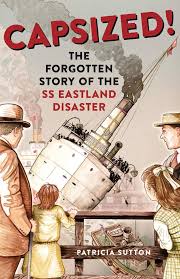
Eps 9: I documented the forgotten disaster of the SS Eastland
The SS Eastland disaster, largely forgotten, involved a passenger ship that capsized in the Chicago River on July 24, 1915, leading to the deaths of 844 people. This tragedy occurred when the ship was overloaded for a company picnic, causing it to roll onto its side while still docked. Despite being one of the deadliest maritime disasters in American history, it has received little attention over the years. Factors contributing to the disaster included poor safety measures and design flaws, such as a high center of gravity which made the vessel unstable. Efforts to memorialize the event have been sparse, but some historians continue to document and share the story to ensure it is not completely forgotten.
| Seed data: | Link 1 |
|---|---|
| Host image: | StyleGAN neural net |
| Content creation: | GPT-3.5, |
Host

Gertrude Boyd
Podcast Content
This tragedy wasn't a bolt from the blue; it was a catastrophe waiting to happen. The SS Eastland had a history of near disasters, including multiple incidents of listing and mechanical issues. Post-disaster investigations revealed that modifications meant to improve safety — ironically, the addition of lifeboats after the Titanic disaster — exacerbated the vessel’s instability. Sadly, this was a grim reminder of bureaucratic indifference, as repeated warnings about the ship's design flaws went unheeded.
Yet, what makes the Eastland disaster particularly poignant is how quickly it vanished from public consciousness, overshadowed by the looming specter of World War I and the passage of time. Documentation of survivor accounts and newspaper clippings reveal a city's heartache, a flurry of lawsuits, and a concerted yet ultimately futile effort to seek justice and accountability. The Eastland serves as a stark cautionary tale about the perils of negligence and the devastating consequences of human hubris. Despite its historical significance, the SS Eastland catastrophe remains one of America’s somber, yet curiously forgotten, maritime misfortunes.
By unearthing the details of the Eastland disaster, we not only do justice to the memory of those lost but also imbue a sense of due diligence in contemporary practices, urging us never to overlook the vital importance of maritime safety regulations. It’s a chapter of history that deserves more than a footnote, a tale of preventable tragedy imbued with lessons that remain strikingly relevant even today. So, as we document the echoes of that fateful day, let’s remember that each name lost to the depths of the Chicago River carries a story, urging us to ensure such an oversight never slips through the cracks of our collective memory again.