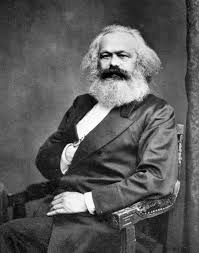
Eps 1: How Karl Marx Changed Economics
— Marx
You can put Marx back into the nineteenth century, but you can't keep him there.
It sounds perverse to say that Marx's philosophy was dedicated to human freedom.
Marx did not provide much guidance for how a society would operate without property or classes or a state.
Host

Nicole Gonzalez
Podcast Content
Marx was not content to simply observe the world around him - he was determined to change it. He believed that capitalism was inherently flawed, and that it would inevitably lead to the exploitation of the working class. In his most famous work, "Capital," Marx laid out his theory of surplus value, arguing that capitalists profit by extracting surplus value from the labor of workers. This, he believed, was the root of the economic inequality and social injustice that plagued society.
Marx's ideas were revolutionary in more ways than one. They challenged the prevailing economic theories of his time, which tended to justify and uphold the status quo. Marx, however, saw through the facade of capitalism and recognized it for what it truly was - a system that benefited the few at the expense of the many.
One of the key contributions of Marx to economics is his concept of dialectical materialism. This theory posits that societal change occurs as a result of material conditions, such as economic forces, rather than through abstract ideas or values. According to Marx, history is driven by the conflict between different classes - the bourgeoisie and the proletariat - and this conflict is the engine of social change.
Marx's ideas have had a lasting impact on the field of economics. His critique of capitalism has inspired generations of thinkers to question the status quo and imagine a more just and equitable society. While not all of Marx's predictions have come to pass, his diagnosis of the problems inherent in capitalism remains relevant today.
In this podcast, we will explore how Karl Marx changed economics and how his ideas continue to influence our understanding of the world. We will delve into his theories of surplus value, class struggle, and historical materialism, and consider their implications for our society today. Join us as we explore the legacy of this towering figure in economic thought and consider how his ideas can help us imagine a better future.