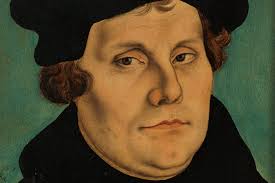
Eps 2: How did Martin Luther change history?
Martin Luther was a German monk and theologian who sparked the Protestant Reformation in the 16th century by challenging the corruption and teachings of the Catholic Church. By nailing his 95 Theses to the church door in Wittenberg, Luther questioned the authority of the Pope and emphasized the importance of faith and scripture over tradition and hierarchy. His actions led to the formation of new Christian denominations and played a significant role in shaping the modern world. Luther's impact on history can be seen in the emphasis on individual rights and freedoms, the rise of literacy and education, and the eventual spread of democracy and human rights. Overall, Martin Luther's actions had a lasting and transformative effect on Western society.
| Seed data: | Link 1 |
|---|---|
| Host image: | StyleGAN neural net |
| Content creation: | GPT-3.5, |
Host

Michele Franklin
Podcast Content
Born in 1483 in Eisleben, Germany, Luther was destined for a career in law. However, after surviving a near-death experience during a violent thunderstorm, he made a vow to become a monk and dedicate his life to serving God. Luther entered the Augustinian friary in Erfurt, where he studied theology and immersed himself in the teachings of the Catholic Church.
It was during his time as a monk that Luther began to question the practices and doctrines of the Church. He became increasingly disillusioned with the corruption and wealth of the Church hierarchy, as well as its teachings on salvation and penance. Luther's study of the Bible led him to believe that salvation was not earned through good works or indulgences, but rather through faith in God's grace.
In 1517, Luther famously nailed his "95 Theses" to the door of the Castle Church in Wittenberg, condemning the sale of indulgences and challenging the authority of the Pope. This act marked the beginning of the Protestant Reformation, a movement that sought to reform the Catholic Church and return to the teachings of the Bible.
Luther's actions sparked a firestorm of controversy and division within the Church. He was excommunicated by the Pope in 1521 and declared a heretic by the Holy Roman Emperor. However, Luther's influence continued to grow as he translated the Bible into German and wrote numerous theological works that emphasized the importance of individual faith and the priesthood of all believers.
The Protestant Reformation soon spread throughout Europe, leading to the formation of new Protestant denominations and forever changing the religious landscape of the continent. Luther's teachings laid the groundwork for the development of Protestantism, a major branch of Christianity that continues to thrive to this day.
Beyond his theological impact, Martin Luther's legacy also extends to the political and social realms. His ideas about individual freedom, personal responsibility, and the separation of church and state helped to shape modern notions of democracy and religious tolerance. Luther's influence can be seen in the founding principles of many Western societies, including the United States.
In conclusion, Martin Luther's actions and beliefs had a profound impact on the course of history. Through his courage, conviction, and dedication to reforming the Church, Luther sparked a movement that forever changed the religious, political, and social landscape of Europe. His legacy continues to endure today, as the principles he championed continue to shape and inspire generations of believers and thinkers. Martin Luther truly changed history in ways that are still felt and appreciated centuries later.