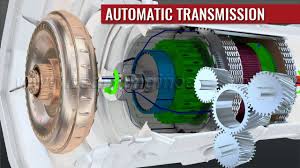
Eps 1: How automatic transmissions in cars work
Automatic transmissions in cars function using a complex system of gears, hydraulics, and electronics that work together to shift gears without driver input. The main components include the planetary gear set, which provides different gear ratios, the torque converter, which transfers engine power to the transmission, and a hydraulic system that controls gear shifting. Electronic control units (ECUs) play a crucial role in managing the timing and smoothness of shifts based on various driving conditions. This system allows for smooth acceleration and improved fuel efficiency, making driving more convenient and efficient.
| Seed data: | Link 1 |
|---|---|
| Host image: | StyleGAN neural net |
| Content creation: | GPT-3.5, |
Host

Leon Knight
Podcast Content
As you accelerate, hydraulic systems within the transmission direct pressurized transmission fluid to engage different clutch packs and bands. These components work together to change gears smoothly, adjusting the gear ratio by locking or unlocking different combinations of gears in the planetary gear set. Modern automatic transmissions often feature more than six gears, allowing for finer control over the vehicle’s speed and power output. This results in improved fuel efficiency and better performance across various driving conditions.
Additionally, many automatics incorporate advanced features like adaptive learning and manual shift modes, enhancing the driving experience. Adaptive learning enables the transmission to modify its shifting patterns based on your driving style over time. Manual shift modes, commonly known as “semi-automatic” or “manumatic” modes, give you the option to change gears manually using paddle shifters or the gear lever, blending the control of a manual transmission with the convenience of an automatic.
These systems rely heavily on electronics and microprocessors to ensure seamless operation. Sensors monitor engine speed, throttle position, and even data from the vehicle’s GPS to optimize shifting. When everything works together, it results in a highly adaptable system that keeps a smooth transition between gears while maximizing the vehicle’s performance and fuel economy. Yet, despite this complexity, regular maintenance like fluid changes and software updates can keep an automatic transmission running efficiently for many years.