Eps 76: History Of Royal Incest And Inbreeding
— History
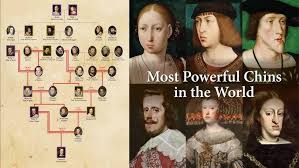
The podcast delves into the historical prevalence of incest and inbreeding among various royal families, primarily in Europe. It highlights how these practices were often employed to keep power, wealth, and the purity of noble bloodlines within the family. Several royal lineages, like the Habsburgs, are discussed in detail, illustrating the extreme cases of genetic disorders and deformities that emerged from such inbreeding. The podcast also touches on the societal and political reasons behind these marriages, including alliances and the consolidation of power. It discusses the consequences of these practices on the health and longevity of royal lines, as well as the eventual shift away from incestuous unions as modern understanding of genetics and public sentiment evolved.
| Seed data: | Link 1 |
|---|---|
| Host image: | StyleGAN neural net |
| Content creation: | GPT-3.5, |
Host

Ellen Ellis
Podcast Content
In medieval Europe, royal incest wasn't just an anomaly but a strategy, where cousin marriages were abundant. The practice continued well into the Renaissance and beyond. Queen Victoria of the United Kingdom passed hemophilia, a genetic disorder, down to several European royal families, earning it the moniker "the royal disease." The Russian Tsar Nicholas II's son, Alexei, famously suffered from this condition, deeply affecting the family's public and private life. The British royal family tree itself is a web of interlinked branches, with marriages between first cousins, such as Queen Victoria and Prince Albert, being quite common.
However, the consequences of inbreeding weren't just physical; they also had psychological impacts. Mental instability, depression, and a higher incidence of inherited psychiatric conditions were reported among inbred royalty. The infamous case of Ludwig II of Bavaria, whose erratic behavior and mysterious death still intrigue historians, is attributed partly to his deeply inbred lineage.
This practice gradually diminished as the understanding of genetics evolved and the political landscape changed. The taboo surrounding incest, reinforced by religion and societal norms, also played a crucial role in steering royal strategies away from such unions. Today, while some traditions linger in certain royal circles, the overwhelming majority of monarchies have long abandoned the overt practice of inbreeding in favor of healthier, more diverse genetic unions. The story of royal incest and inbreeding serves as a striking example of how the intersection of power, tradition, and biology can shape history in unexpected ways.