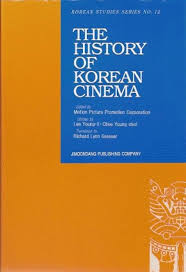
Eps 143: History of Korean cinema
— History
The podcast discusses the evolution of Korean cinema, highlighting its origins in the early 20th century with silent films and the influence of Japanese colonial rule. Post-Korean War, the industry saw a revival in the 1950s with the Golden Age, producing classics like "The Housemaid" (1960). The 1970s and 1980s were marked by government censorship, but directors still pushed creative boundaries. The 1990s brought a New Wave of directors like Park Chan-wook and Bong Joon-ho, who gained international acclaim. Landmark films such as "Oldboy" and "Parasite" showcase the unique storytelling and stylistic prowess of Korean cinema, cementing its global influence.
| Seed data: | Link 1 |
|---|---|
| Host image: | StyleGAN neural net |
| Content creation: | GPT-3.5, |
Host

Suzanne Arnold
Podcast Content
Post-liberation in 1945, Korean cinema experienced a renaissance, with the 1950s and 1960s often referred to as the "Golden Age" of Korean cinema. This period saw an influx of melodramatic films and the rise of prominent directors like Kim Ki-young, whose film "The Housemaid" is still celebrated today. However, the Korean War and political instability brought challenges, leading to censorship under the authoritarian regimes that followed.
The late 1980s and 1990s marked significant changes due to the democratization of Korea, which lifted many censorship restrictions and allowed for greater creative freedom. This period, also known as the Korean New Wave, introduced globally renowned filmmakers such as Park Chan-wook and Hong Sang-soo, who brought fresh, innovative storytelling and complex character studies to the screen.
Entering the new millennium, Korean cinema gained international acclaim, winning prestigious awards at global film festivals. Directors like Bong Joon-ho, with his critically acclaimed film "Parasite," which won the Palme d'Or at Cannes and the Academy Award for Best Picture, epitomized this global dominance. The industry's focus on high-quality production, unique storytelling, and the blending of genres has captivated audiences worldwide, ensuring South Korea's place at the forefront of international cinema.
In recent years, the rise of the Korean Wave, or Hallyu, has seen Korean films, dramas, and K-pop gaining massive popularity across the globe, further propelling the cinema industry into new heights. The history of Korean cinema is thus a testament to resilience, creativity, and a continual evolution that reflects the country's rich cultural heritage and modern dynamism. As Korean filmmakers continue to push boundaries and explore new narratives, the future of Korean cinema looks incredibly promising, poised to carry forward its legacy of excellence and innovation on the global stage.