Eps 135: History Of Christmas
— History
The origins of Christmas date back to ancient pagan celebrations such as Saturnalia and Yule, which were marked by feasting and merrymaking around the winter solstice. In the 4th century, Christians adopted December 25th to celebrate the birth of Jesus Christ, aligning it with these existing festivals to ease the transition for converts. Over the centuries, various traditions have evolved and merged, including the exchange of gifts, the decoration of Christmas trees, and the figure of Santa Claus, who has roots in stories of Saint Nicholas, a charitable 4th-century bishop. Christmas customs have continually adapted, influenced by regional practices, historical events, and cultural shifts, making the holiday a rich tapestry of both secular and religious elements.
| Seed data: | Link 1 |
|---|---|
| Host image: | StyleGAN neural net |
| Content creation: | GPT-3.5, |
Host

Madison Walker
Podcast Content
Christianity began to shape the celebration when early Christians chose December 25th to mark the birth of Jesus Christ, aligning it with these pre-existing festivities to ease the transition for new converts. The date itself isn't biblically evidenced but was rather selected to correspond with the Roman winter solstice and existing pagan rituals. By the Middle Ages, Christmas had become a key celebration in the Christian calendar though it featured a mix of joyous celebration and solemn religious observance.
As Christmas spread across Europe, it continued to absorb local customs. The tradition of gift-giving, inspired by the Magi's offerings in the Nativity story and St. Nicholas's legendary generosity, became more central. St. Nicholas, a 4th-century bishop known for his kindness, evolved into the beloved figure of Santa Claus, who combined elements of various gift-givers including the Dutch Sinterklaas and the British Father Christmas.
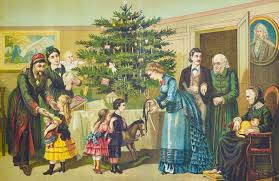
The Christmas tree, originally a German tradition symbolizing eternal life through its evergreen branches, was popularized in England and subsequently America by Queen Victoria and her German husband, Prince Albert, in the 19th century. Ornaments, candles, and eventually electric lights adorned these trees, emphasizing the light amid darkness theme central to winter solstice celebrations.
In the 20th century, Christmas saw both commercial and humanitarian developments. The proliferation of mass marketing and the advent of department stores transformed Christmas into an economic juggernaut, with Santa Claus becoming a pivotal figure in advertising. Caroling, cards, and public displays grew in prominence, adding layers of community and personal interaction to the holiday.
However, alongside commercialism, Christmas retained its core messages of goodwill, charity, and communal gathering. This period also saw the rise of global humanitarian efforts, such as those by organizations including the Salvation Army, emphasizing the charitable spirit of the holiday. In essence, today's celebration of Christmas is a mosaic of ancient and modern elements, each layer contributing to the richly woven tapestry that marks this annual festivity. By reflecting on its long and diverse history, we understand not only the cultural importance of Christmas but also its enduring ability to adapt and unify across time and peoples.