Eps 8: History of Chinese immigration to the US
— History
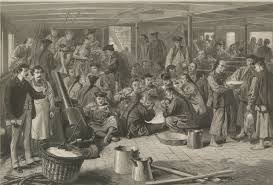
The history of Chinese immigration to the US began in the 19th century, particularly during the California Gold Rush in the 1850s. Chinese immigrants were initially attracted by economic opportunities, often working in mining, railroad construction, and agriculture. This influx led to significant cultural contributions but also to social tensions and racial discrimination. Landmark events include the 1882 Chinese Exclusion Act, which severely restricted Chinese immigration and was the first significant law restricting immigration to the US based on ethnicity. This period of exclusion lasted until the act's repeal in 1943. Post-1965 saw a resurgence in Chinese immigration due to changes in US immigration policy, leading to a more diverse and integrated Chinese American community. The podcast highlights the economic contributions, cultural impact, and the enduring challenges faced by Chinese immigrants across these eras.
| Seed data: | Link 1 |
|---|---|
| Host image: | StyleGAN neural net |
| Content creation: | GPT-3.5, |
Host

Franklin Steward
Podcast Content
Despite their pivotal role in monumental projects like the construction of the Transcontinental Railroad, Chinese immigrants quickly became targets of systemic discrimination and violence. Economic downturns in the latter part of the 19th century fueled anti-Chinese sentiment and led to the enactment of racially exclusionary laws. The most notorious of these was the 1882 Chinese Exclusion Act, which marked the first significant legal restriction on immigration in U.S. history. This act halted the immigration of Chinese laborers and placed severe limitations on the rights of Chinese immigrants already residing in the country.
Yet, the Chinese American community endured and adapted, forming Chinatowns in cities such as San Francisco, Los Angeles, and New York. These neighborhoods provided a semblance of safety and a cultural refuge where traditions, languages, and practices could be preserved. The World War II era began to see shifts in American policy, as China became an ally to the U.S. against Japan, leading to the repeal of the Chinese Exclusion Act in 1943. However, quotas remained restrictive until the Immigration and Nationality Act of 1965, which abolished the racially biased quotas and allowed for increased Chinese immigration.
In more contemporary times, Chinese immigration has diversified, with newcomers being students, professionals, and entrepreneurs, contributing to America’s intellectual and economic landscape. The Chinese American community has grown and flourished, yet it hasn’t been without its challenges. Incidents of racism and stereotyping persist, and recent geopolitical tensions have created new challenges. Despite these obstacles, Chinese Americans continue to shape the cultural, economic, and political fabric of the United States, embodying the enduring spirit of resilience and contribution that began over a century and a half ago.