Eps 1851: Halloween
— The too lazy to register an account podcast
The 10-minute podcast titled "Halloween" discussed the history and significance of the holiday, as well as its modern-day traditions. The podcast began by explaining that Halloween originated from the ancient Celtic festival of Samhain, which marked the end of the harvest season and the beginning of winter. It was believed that on this night, the boundary between the living and the dead was blurred, allowing spirits to roam the earth. The podcast then delved into the various customs associated with Halloween, such as dressing up in costumes. It explained that this tradition derived from the belief that disguising oneself would confuse the roaming spirits and protect against their mischief. Trick-or-treating was also discussed, with an emphasis on its evolution from a medieval practice of "souling" to the modern-day tradition of children going door to door in search of candy. Additionally, the podcast highlighted the symbolism of common Halloween icons, such as jack-o'-lanterns and black cats. Jack-o'-lanterns were originally carved from turnips or potatoes to ward off evil spirits, while black cats were associated with witches and superstitions. The podcast concluded by addressing the commercialization of Halloween in recent years, with the holiday becoming a major industry. It mentioned the popularity of haunted houses and Halloween-themed parties, showcasing how Halloween has transformed from a religious and cultural event into a highly anticipated celebration in many parts of the world. Overall, the podcast provided a brief overview of Halloween's history, customs, and its transition from an ancient festival to a widely celebrated holiday.
| Seed data: | Link 1 |
|---|---|
| Host image: | StyleGAN neural net |
| Content creation: | GPT-3.5, |
Host

Dylan Stephens
Podcast Content
As the air turns crisp and the nights grow longer, the world eagerly anticipates the arrival of Halloween. This enchanting holiday, celebrated on the eve of October 31st, holds a unique charm that transcends generations and cultures. Halloween, also known as All Hallows' Eve, allows us to immerse ourselves in a world of mystery, where the realms of the living and the dead coexist, and where spirits and ghouls wander freely among us.
Rooted in ancient Celtic traditions, Halloween has evolved over centuries, blending pagan rituals with Christian practices. The origins can be traced back to the ancient Celtic festival of Samhain, which marked the end of the harvest season and the beginning of winter. On this day, the Celts believed that the boundary between the living and the dead was blurred, allowing the spirits to roam the earth. To appease these restless souls, people would light bonfires and wear costumes to ward off any malevolent spirits.
As time went on, Halloween assimilated with the Christian festival of All Hallows' Day, also known as All Saints' Day. This day is dedicated to honoring and remembering the saints and martyrs in the Christian faith. The evening before, All Hallows' Eve, gradually transformed into Halloween, merging Celtic and Christian traditions into a celebration that combines reverence with mischief, remembrance with revelry.
One of the most beloved aspects of Halloween is its vivacious array of costumes. From witches and vampires to superheroes and princesses, Halloween allows us to explore our alter egos and embrace our imaginations. Costumes not only serve as a form of entertainment but also as protection against malevolent spirits, disguising ourselves and blending in with the supernatural.
Trick-or-treating, a cherished Halloween tradition, sees children and adults alike take to the streets in search of sugary treats. Historically, the practice of going door-to-door, requesting food or money, can be traced back to the Middle Ages. On All Souls' Day, poor individuals would approach homes to receive "soul cakes" in exchange for prayers for the deceased. This act of charity evolved into the modern-day practice of children dressing up and collecting candy from their neighbors.
While Halloween is often associated with youth, adults have also embraced the holiday's spirit of mischief and revelry. Halloween parties and gatherings offer a chance to indulge in elaborate decorations, horror movie marathons, and spooky-themed delicacies. Haunted houses, adorned with cobwebs and inhabited by ghosts and zombies, provide an adrenaline rush for thrill-seekers daring enough to enter.
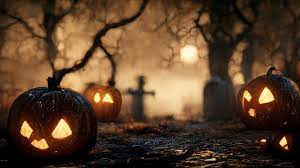
Pumpkins, with their mystical allure, hold a significant place in Halloween lore. Carving them into jack-o'-lanterns is a tradition that originated in Ireland, where turnips were initially used. According to legend, these carved vegetables served as protection against evil spirits, guiding lost souls home and warding off malevolent creatures. Today, households and neighborhoods are adorned with the warm, flickering glow of jack-o'-lanterns, casting an otherworldly spell over the night.
Halloween's global popularity is testament to its universal appeal. Although its traditions may differ from one place to another, the underlying themes of honoring the dead and embracing the supernatural remain constant. From Mexico's vibrant Day of the Dead celebrations to Japan's Obon Festival, various cultures across the globe have their unique ways of commemorating the departed and connecting with the spirit world during this enchanting time of year.
Beyond the costumes and candy, Halloween allows us to confront our fears, toying with the macabre and reveling in the unknown. It serves as a reminder of the cyclical nature of life, acknowledging both the joyous festivities of the living and the poignant remembrance of the deceased. Halloween bridges the gap between the tangible and the ethereal, granting us a brief moment to embrace our fascination with the supernatural and to lose ourselves in the magic of the night.