Eps 1: Financial Markets and Instruments
— Financial Markets and Instruments:
The podcast discusses the various financial markets and instruments that exist, including stocks, bonds, and derivatives. It explains how these markets help companies raise capital and provide investors with opportunities to grow their savings. The podcast emphasizes the importance of understanding the risks and rewards associated with different financial instruments before investing. It also touches on the role of financial institutions and regulators in maintaining the stability and integrity of the financial markets.
| Seed data: | Link 1 |
|---|---|
| Host image: | StyleGAN neural net |
| Content creation: | GPT-3.5, |
Host

Suzanne Arnold
Podcast Content
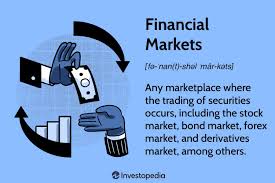
Financial markets are where buyers and sellers come together to trade financial assets such as stocks, bonds, currencies, and commodities. These markets play a crucial role in the global economy by facilitating the flow of funds between investors and borrowers. There are several types of financial markets, including stock markets, bond markets, foreign exchange markets, and derivatives markets.
Stock markets, also known as equity markets, are where shares of publicly traded companies are bought and sold. Investors can buy shares in a company to become part owners and share in the profits through dividends and capital appreciation. The most well-known stock market in the world is the New York Stock Exchange (NYSE), but there are many other stock exchanges around the world where companies list their shares.
Bond markets are where debt securities are traded. Bonds are issued by governments, corporations, and other entities to raise capital. Investors can buy bonds as a way to generate income through interest payments. Bond markets are essential for governments and companies to finance their operations and investments.
The foreign exchange market, or forex market, is where currencies are traded. It is the largest and most liquid market in the world, with trillions of dollars worth of currencies being traded every day. Investors can buy and sell currencies to profit from changes in exchange rates.
Derivatives markets are where financial instruments derived from other assets are traded. Examples of derivatives include options, futures, and swaps. Derivatives allow investors to hedge against risks or speculate on the future price movements of assets.
In addition to the different types of financial markets, there are also various financial instruments that are traded within these markets. For example, stocks represent ownership in a company and can provide investors with dividends and capital gains. Bonds are debt securities that pay a fixed interest rate over a specified period. Currencies are bought and sold in the forex market, with investors seeking to profit from changes in exchange rates.
Options are financial contracts that give the holder the right, but not the obligation, to buy or sell an asset at a specified price within a specific timeframe. Futures are contracts that obligate the buyer to purchase an asset or the seller to sell an asset at a predetermined price on a specified date in the future. Swaps are agreements between two parties to exchange cash flows based on different financial instruments.
Overall, financial markets and instruments play a crucial role in the global economy by facilitating the flow of funds and enabling investors to manage risks and maximize returns. Whether you are an individual investor looking to grow your wealth or a company seeking to raise capital, understanding how financial markets and instruments work is essential for making informed investment decisions. Thank you for tuning in to today's podcast, and we hope you have gained valuable insights into the world of finance.