Eps 1: Father's Day Origin and Traditions
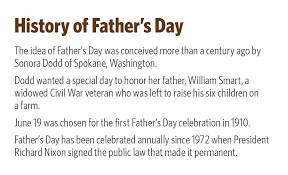
Father's Day originated in the early 20th century as a complement to Mother's Day, first celebrated in the United States. Sonora Smart Dodd is credited with starting the tradition in 1910 to honor her father, a Civil War veteran who raised six children as a single parent. The idea gained popularity, and by 1972, President Richard Nixon made it an official national holiday. Traditions associated with Father’s Day vary globally but commonly include giving cards, gifts, and spending quality time as a family. Popular gifts often include tools, electronics, or personalized items. Many families engage in outdoor activities like barbecues and sports. In some countries, cultural customs influence the celebration, such as offering special meals or ceremonies that honor paternal figures. Overall, Father's Day celebrates and appreciates the contributions and influence of fathers and father figures.
| Seed data: | Link 1 |
|---|---|
| Host image: | StyleGAN neural net |
| Content creation: | GPT-3.5, |
Host

Carter Sutton
Podcast Content
The first Father's Day celebration took place in Spokane on June 19, 1910, coinciding with the month of William Jackson Smart’s birth. Over the next few years, the idea gradually gained traction, with several states observing the day. However, it wasn't until 1966 that President Lyndon B. Johnson issued the first presidential proclamation honoring fathers, designating the third Sunday in June as Father's Day. This was later signed into law by President Richard Nixon in 1972, making it a permanent national holiday.
Traditions associated with Father's Day are diverse and range widely across the world. In the United States, it is common for families to celebrate by giving fathers and father figures gifts, cards, and planning activities that the dad enjoys, such as barbecues, fishing trips, or sports outings. Breakfast in bed or a homemade meal is another popular tradition, providing a way for children to express their appreciation through acts of service.
Globally, Father’s Day takes on different customs reflective of cultural norms. In Germany, known as Vatertag, it is celebrated on Ascension Day and often involves groups of men embarking on hiking trips with wagons loaded with beer and traditional foods. In Thailand, Father's Day is celebrated on December 5th, the birthday of the late King Bhumibol Adulyadej, making it a day for honoring fatherhood while also showing reverence to the King. In Brazil, the holiday takes place on the second Sunday of August, inspired by St. Joachim's Day, a Catholic feast day honoring the Virgin Mary's father.
Each country has woven Father's Day into its own cultural fabric, painting a unique yet universally resonant picture of fatherhood. At its core, Father's Day is an opportunity to reflect on and celebrate the influence fathers and father figures have in our lives, emphasizing gratitude, love, and the importance of family bonds. While the ways of celebration may differ, the underlying sentiment is universal: a day dedicated to honoring the men who have provided guidance, support, and unconditional love.