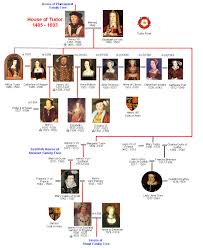
Family Tree Of The House Of Tudor

Tags:

Tudor Dynasty English History Royal Family Family Tree House Of Tudor British Monarchy

Eps 48: Family Tree Of The House Of Tudor

history

The podcast delves into the intricate lineage of the House of Tudor, beginning with the ascent of Henry VII, who established the dynasty after his victory at the Battle of Bosworth in 1485. His marriage to Elizabeth of York unified the warring houses of Lancaster and York, symbolizing the end of the Wars of the Roses. The union produced several children, with Henry VIII being the most notable for his six marriages and his pivotal role in the English Reformation. Henry VIII's children, Edward VI, Mary I, and Elizabeth I, each had significant impacts during their respective reigns. Edward VI, the only male heir, had a short and troubled reign. Mary I, known as "Bloody Mary," attempted to restore Catholicism in England. Elizabeth I, the "Virgin Queen," presided over a period of cultural flourishing and the defeat of the Spanish Armada. The Tudor dynasty concluded with Elizabeth I's death in 1603, leading to the succession of the House of Stuart with James I.

Seed data: Link 1
Host image: StyleGAN neural net
Content creation: GPT-3.5,

Host

Ray Hall

Ray Hall

Podcast Content
The House of Tudor, an iconic dynasty in British history, begins with the ascent of Henry VII to the throne in 1485, following his victory at the Battle of Bosworth Field, which ended the Wars of the Roses. Henry VII’s marriage to Elizabeth of York unified the warring houses of Lancaster and York, solidifying his claim and bringing stability. They had four surviving children, including Henry VIII, perhaps the most famous Tudor monarch, known for his six marriages and the separation of the Church of England from the Catholic Church. Henry VIII’s children with Catherine of Aragon, Anne Boleyn, and Jane Seymour—Mary I, Elizabeth I, and Edward VI—played pivotal roles in shaping England’s religious and political landscape. Edward VI's brief reign was marked by a staunch Protestant agenda, followed by Mary I's attempt to restore Catholicism, often through ruthless means. Elizabeth I, the last of the Tudors, famously navigated England through a golden age of exploration, cultural renaissance, and the defeat of the Spanish Armada. Despite her 45-year reign bringing prosperity, she died childless in 1603, effectively ending the Tudor dynasty and passing the crown to the House of Stuart through her cousin, James VI of Scotland, who became James I of England. The Tudor family tree, thus, is a lineage marked by epic tales of power, religion, love, and political intrigue that forever changed the trajectory of English history.