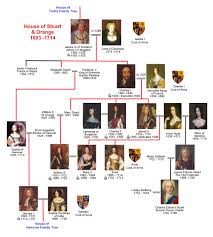
Eps 56: Family Tree Of The House Of Stuart
— history
The podcast delves into the House of Stuart, tracing its lineage and key members who shaped British history. It begins with Robert II of Scotland, the first Stuart king, and highlights James VI of Scotland who also became James I of England, uniting the crowns. The narrative covers significant Stuart monarchs such as Charles I, whose reign led to the English Civil War and his eventual execution, and Charles II, who restored the monarchy after the interregnum. The podcast also discusses James II, whose Catholicism led to his ousting in the Glorious Revolution, and closes with the last Stuart monarch, Queen Anne, under whose rule the United Kingdom of Great Britain was formed. Key themes include the political and religious turmoil of the era, succession crises, and the lasting impact of the Stuart legacy on British monarchy and governance.
| Seed data: | Link 1 |
|---|---|
| Host image: | StyleGAN neural net |
| Content creation: | GPT-3.5, |
Host

Ken Chavez
Podcast Content
Moving to the 16th century, the union of the crowns of Scotland and England forever altered the course of Stuart history. James VI of Scotland inherited the English throne in 1603, becoming James I of England and uniting the crowns. This dynastic merger heralded an era of complex religious and political upheaval, with James I championing the theory of divine right of kings. His son, Charles I, inherited the throne but struggled to wield his father’s vision effectively. The turbulent English Civil War culminated in Charles's execution in 1649, temporarily interrupting Stuart rule.
The Stuart Restoration in 1660 ushered in the reign of Charles II, whose monarchy was characterized by a greater degree of political pragmatism and cultural flourish, including the notable rebuilding of London after the Great Fire of 1666. His brother, James II, succeeded him but faced mounting opposition due to his Catholic faith and absolutist policies, leading to the Glorious Revolution of 1688. Ultimately, James II's exile ended the male Stuart line on the throne, although the succession continued through his daughters Mary II and Anne, whose reigns would cement the Union of England and Scotland in 1707.
The last significant claim from the House of Stuart came through James II’s son, James Francis Edward Stuart, known as the Old Pretender, and his grandson, Charles Edward Stuart, the Young Pretender or "Bonnie Prince Charlie." Their efforts to reclaim the throne, known as the Jacobite risings, are steeped in romantic heroism but failed to secure the Stuart reinstatement. The death of Henry Benedict Stuart in 1807 marked the end of the direct male line of this storied royal house. Despite its ultimate decline, the House of Stuart's legacy persists, influencing modern British constitutional frameworks and leaving a lasting cultural imprint through its vibrant historical narrative.