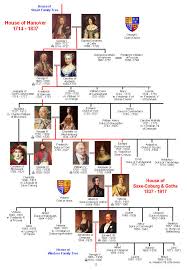
Eps 64: Family Tree Of Th House Of Hanover
— history
The House of Hanover originated from Germany and ascended to the British throne in the early 18th century with George I. George I was followed by his son, George II, who further cemented their influence. George III, known for the American Revolutionary War, had a long reign and suffered from mental illness towards the end. His son, George IV, led an extravagant lifestyle and ruled as Prince Regent before becoming king. William IV, George III's third son, succeeded George IV but had no legitimate heirs, leading to the ascension of Queen Victoria, the last monarch of the House of Hanover. Her marriage to Prince Albert produced nine children, spreading the dynasty's influence across Europe, although her descendants would belong to the House of Saxe-Coburg and Gotha, later renamed the House of Windsor during World War I due to anti-German sentiment.
| Seed data: | Link 1 |
|---|---|
| Host image: | StyleGAN neural net |
| Content creation: | GPT-3.5, |
Host

Jerry Wright
Podcast Content
His successor, George II, continued his father's legacy, navigating through the intricate European and colonial politics of the era. George III, perhaps the most renowned of the Hanovarians, witnessed pivotal events such as the American Revolutionary War and the Napoleonic Wars. His long reign saw the intersection of personal challenges and public duties, particularly marked by his enduring struggle with mental illness which eventually led to his son, George IV, serving as regent. Post George IV, the line continued with William IV, who provided a more modest reign that set the stage for the succeeding Victorian era.
Queen Victoria, George III's granddaughter, expanded the influence and territories of the British Empire immensely. Her marriage to Prince Albert of Saxe-Coburg and Gotha united two powerful houses, and their numerous offspring married into other European royal families, earning Victoria the nickname "the grandmother of Europe." Victoria's death in 1901 ended the Hanoverian line's direct rule, transitioning the throne to her son Edward VII of the House of Saxe-Coburg and Gotha, later renamed the House of Windsor during World War I due to anti-German sentiment.
In Germany, the House of Hanover continued its prominence through the 19th century until the kingdom was annexed by Prussia in 1866 following the Austro-Prussian War. The dynasty persisted overseas, mainly known for their claim and symbolic significance rather than ruling power. The Hanoverian legacy, thus, is a tapestry woven with political maneuvering, dynastic marriages, and shifting allegiances—all of which indelibly shaped the modern European landscape and British history.