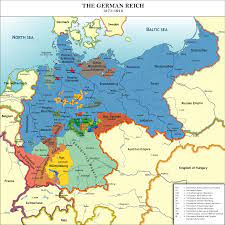
Eps 2289: Evoluzione of Germany from 1871 to 2024
— The too lazy to register an account podcast
The podcast titled "Evolution of Germany from 1871 to 2024" explores the historical and future developments of Germany. The host discusses how Germany emerged as a unified nation in 1871 following the Franco-Prussian War. They highlight the country's rapid industrialization and economic growth during the late 19th and early 20th centuries, leading Germany to become a major European power. The podcast delves into Germany's role in World War I, the Treaty of Versailles, and the subsequent economic and political turmoil during the interwar period. It emphasizes the rise of Adolf Hitler and the Nazi Party, which eventually led to World War II and the devastation of Germany. After the war, Germany was divided into East and West, with the communist East Germany and democratic West Germany. The podcast covers the unification of Germany in 1990, following the fall of the Berlin Wall, and the subsequent economic challenges faced by the newly unified country. Looking ahead to the future, the host discusses Germany's position as a key player in the European Union and its efforts towards economic stability and social integration. They also touch upon Germany's demographic changes and the challenges posed by an aging population. Overall, the podcast provides a concise overview of Germany's historical evolution from its unification in 1871 to the present day, highlighting significant events and developments that have shaped the nation.
| Seed data: | Link 1 |
|---|---|
| Host image: | StyleGAN neural net |
| Content creation: | GPT-3.5, |
Host

Soham Webb
Podcast Content
The year 1871 marked a significant milestone in German history, as it was the year that the German Empire was officially proclaimed. Under the leadership of Otto von Bismarck, Germany became a unified and powerful nation, rivalling the other major European powers of the time. The economic growth and industrial development that followed this unification laid the foundation for Germany to become a global powerhouse in the years to come.
However, the early 20th century brought about a period of great turmoil for Germany. The devastation of World War I and the economic hardships that followed paved the way for the rise of extremism and the eventual takeover of the Nazi party in 1933. The ensuing years saw the horrors of World War II and the eventual division of Germany into East and West, symbolizing the ideological and political divide that had taken hold of the country.
The post-war period was a time of rebuilding and reconciliation for Germany. The division between East and West became a symbol of the larger ideological divide between the Western powers and the Soviet Union. The construction of the Berlin Wall in 1961 further solidified this divide, as families and communities were torn apart by the physical barrier.
The reunification of Germany in 1990 marked a new chapter in the country's history. The fall of the Berlin Wall and the end of the Cold War symbolized the end of the ideological divide that had plagued the country for decades. Germany emerged as a united and democratic nation, ready to embrace its role as a leader in Europe and on the global stage.
In the years since reunification, Germany has continued to evolve and adapt to the changing political and economic landscape. The country has emerged as a major player in the European Union, leading efforts to promote stability and cooperation among member states. Germany's economy has remained strong, with a focus on innovation and sustainability driving growth in key industries.
Looking ahead to 2024, Germany faces a new set of challenges and opportunities. The ongoing refugee crisis, the rise of populist movements, and the threat of climate change all pose significant challenges to the country's stability and prosperity. However, Germany's history of resilience and adaptability suggests that the country is well-equipped to navigate these challenges and continue to thrive in the years to come.
As we wrap up our discussion on the evolution of Germany from 1871 to 2024, it is clear that the country has undergone tremendous change and transformation over the past century and a half. From the unification of the German Empire to the division of East and West, and finally to the reunification and rise of a united Germany, the country has faced many obstacles and triumphs along the way.
Germany's ability to overcome these challenges and emerge stronger than before is a testament to the resilience and determination of its people. As we look towards the future, we can only hope that Germany will continue to build on its past successes and remain a beacon of stability and prosperity in a rapidly changing world. Thank you for joining us on this journey through Germany's history, and we look forward to exploring more topics with you in future episodes.