Eps 2376: Entstehung einer Caldera
— The too lazy to register an account podcast
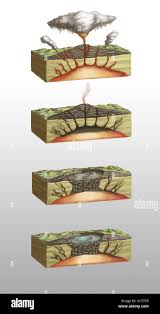
The podcast discusses the formation of a caldera, which is a large, bowl-shaped volcanic depression. Calderas are typically formed when a volcano collapses into its emptied magma chamber following a large eruption. The collapse creates a crater that can be several kilometers wide and hundreds of meters deep. Calderas can also form when magma is slowly drained from a chamber, causing the ground above to sink. The podcast explains the processes involved in caldera formation and the different types of calderas that can be found around the world.
| Seed data: | Link 1 |
|---|---|
| Host image: | StyleGAN neural net |
| Content creation: | GPT-3.5, |
Host

Brian Baker
Podcast Content
Calderas are typically much larger than the more common volcanic craters that we see on most volcanoes. These craters can range in size from a few kilometers to tens of kilometers in diameter, and can be quite deep as well. The formation of a Caldera is a complex process that involves a series of volcanic events that can span thousands or even millions of years.
One of the most common ways that Calderas are formed is through what is known as a super eruption. These eruptions are incredibly powerful and can expel massive amounts of volcanic material, sometimes covering hundreds of square kilometers with ash and pumice. When this happens, the weight of the overlying rock becomes too much for the weakened volcanic structure to support, and the ground collapses into the empty magma chamber below, creating a Caldera.
Another way that Calderas can form is through a series of smaller eruptions that gradually build up a volcanic cone over time. Eventually, the pressure from these eruptions can cause the sides of the volcano to collapse inward, forming a Caldera. This process is known as a caldera-forming eruption.
One famous example of a Caldera is the Yellowstone Caldera in Wyoming, USA. This Caldera is one of the largest in the world, measuring about 55 by 72 kilometers in size. It was formed during a series of super eruptions that occurred about 2.1 million, 1.3 million, and 640,000 years ago. These eruptions deposited massive amounts of volcanic material across North America and created the iconic landscape that we see at Yellowstone National Park today.
Calderas are not only important for understanding the geologic history of a region, but they can also have significant impacts on the environment and surrounding communities. The aftermath of a Caldera-forming eruption can lead to widespread devastation, loss of life, and disruption of ecosystems. However, Calderas can also create fertile soil and unique habitats that support a variety of plant and animal species.
In conclusion, the formation of a Caldera is a fascinating and complex process that involves powerful volcanic eruptions and the collapse of the ground into empty magma chambers. These massive volcanic features can be found all over the world and play a crucial role in shaping our planet's landscape and geologic history. Thank you for listening to our podcast on the creation of Calderas, we hope you have learned something new and interesting today. Stay tuned for more episodes on geological wonders and natural phenomena.