Eps 3: Dominican Republic and Haiti is both from the Hispaniola
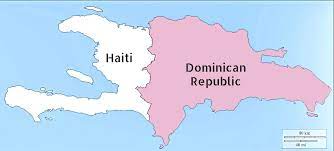
In this 10-minute podcast titled "Dominican Republic and Haiti is both from the Hispaniola," the host discusses the shared history and geographical connection between the Dominican Republic and Haiti. The two countries are located on the island of Hispaniola in the Caribbean region. The podcast explores the complex relationship between the Dominican Republic and Haiti, emphasizing that they are both part of the same island but have distinct cultural, linguistic, and historical differences. The island was colonized by the Spanish in the late 15th century and later became a hub for transatlantic trade, slavery, and plantation economies. The host mentions how the division between the Spanish-controlled eastern side and the French-controlled western side eventually led to the establishment of two separate nations: the Dominican Republic and Haiti. Despite their shared origins, various factors such as colonization, nationality, language, and race contributed to the development of separate identities for the two countries. Throughout history, there have been tensions and conflicts between the Dominican Republic and Haiti, including territorial disputes and border issues. However, the podcast highlights efforts made by both nations to improve relations and promote cooperation. Overall, the podcast offers a brief overview of the historical, cultural, and political aspects that connect and differentiate the Dominican Republic and Haiti, emphasizing the importance of understanding the shared heritage of the two countries while acknowledging their distinct identities.
| Seed data: | Link 1 |
|---|---|
| Host image: | StyleGAN neural net |
| Content creation: | GPT-3.5, |
Host

Camila Arnold
Podcast Content
Welcome to our podcast today, where we delve into the history, culture, and relationship between the Dominican Republic and Haiti. Situated on the tropical island of Hispaniola, which is the second-largest island in the Caribbean, these two nations have shared a complex and intertwined history, shaped by colonization, cultural influences, and struggles for independence.
To understand the present dynamics between the Dominican Republic and Haiti, we must first explore their shared past. The island of Hispaniola was originally inhabited by the indigenous Taino people before Christopher Columbus arrived in 1492. Shortly after, Spain claimed the eastern two-thirds of the island, which is now the Dominican Republic, while France colonized the western third, known as Saint-Domingue, which later became Haiti.
The European powers established sugar plantations, bringing African slaves to work under horrendous conditions. However, the circumstances in each part of the island differed greatly, leading to distinct cultural and social developments that persist to this day. The Spanish side was characterized by a predominantly mixed-race population and a strong influence from Spanish colonial traditions, while the French side had a larger population of enslaved Africans, which heavily influenced the language, culture, and religion of Haiti.
Centuries of colonial rule eventually led to the struggle for independence. In 1804, Haiti became the first independent black republic in the world, after a successful slave revolt against the French. The Dominican Republic, on the other hand, gained independence from Spain in 1821, only to be reannexed by Haiti a short time later. This period of Haitian rule, which lasted for over two decades, left a deep-rooted impact on the Dominican Republic, both culturally and politically.
The Dominican Republic finally achieved full independence in 1844, resulting in many conflicts and tensions between these neighboring nations. Over the years, differences in language, religion, and societal norms have played a significant role in shaping the rifts and occasional hostilities observed between the two countries. Despite their proximity and shared history, the Dominican Republic and Haiti have experienced vastly different political and economic trajectories, leading to diverse socio-economic conditions.
Today, the Dominican Republic boasts a thriving tourism industry, attracting millions of visitors each year to its pristine beaches, historical landmarks, and vibrant culture. The capital city, Santo Domingo, is renowned for its colonial architecture, which reflects the country's rich heritage. In contrast, Haiti, the poorest country in the Western Hemisphere, faces numerous socio-economic challenges, including poverty, political instability, and natural disasters.
However, it is important to recognize that both nations contain remarkable beauty, resilience, and cultural richness. For instance, merengue, a popular genre of music and dance, originated in the Dominican Republic but is also widely embraced by Haitian communities. This shared cultural element serves as a reminder that despite their differences, the Dominican Republic and Haiti are intertwined in many ways.
Efforts have been made by both nations in recent years to improve relations and foster cooperation. Despite historical tensions, shared challenges such as migration, trade, and environmental concerns have brought the governments and people of the Dominican Republic and Haiti closer together. Various initiatives have been launched to bridge the gap and address disparities, focusing on promoting dialogue, cultural exchange, and economic collaboration.
In conclusion, the Dominican Republic and Haiti share a complex and intertwined history rooted in colonization, struggle for independence, and diverging socio-economic paths. While differences in language, culture, and politics have sometimes led to tensions, they also present opportunities for mutual understanding and collaboration. As both nations continue to grow and evolve, it is crucial to remember that the shared heritage of Hispaniola connects the people of the Dominican Republic and Haiti on a profound level.