Eps 58: Daily Life In The Stuart Era
— history
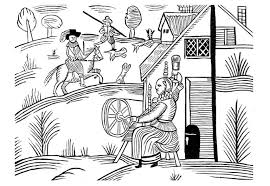
The Stuart Era, spanning from 1603 to 1714, was marked by dramatic changes in daily life, influenced by political upheaval, religious strife, and social transformation. People primarily lived in rural settings, engaging in agriculture, but urbanization gradually increased. Homes were made of timber and wattle-and-daub, with thatched or tiled roofs. Diets were simple, consisting mainly of bread, pottage, and ale, while meat was a luxury for many. Clothing styles varied by class, with the wealthy wearing elaborate garments made of silk and lace, while the poor wore simple woolen clothes. Health care was rudimentary, relying on herbal remedies and the knowledge of local healers, with diseases like the plague posing significant threats. Education was not widely accessible, mostly limited to boys of the upper classes, who might attend grammar schools and universities. The Church played a central role in community life, with regular attendance expected. Leisure activities included fairs, markets, and religious festivals, along with sports like archery and early forms of football. The era saw the beginning of theater and literature flourishing, with figures like Shakespeare making their mark. Social hierarchy was rigid, but the period also experienced growing movements towards political and religious reform, setting the stage for future changes in British society.
| Seed data: | Link 1 |
|---|---|
| Host image: | StyleGAN neural net |
| Content creation: | GPT-3.5, |
Host

Stacey Pena
Podcast Content
For the burgeoning middle class, life was a balance of hard work and modest comfort. This group included merchants, shopkeepers, and skilled craftsmen who lived in bustling towns like London, which was rapidly expanding. The daily grind for these individuals revolved around their trades, with marketplaces becoming hubs of economic activity. The development of coffeehouses in the latter part of the era provided new social venues for intellectual and political discourse.
The lower classes, which encompassed peasants and laborers, led far more precarious lives. They toiled long hours in agriculture or trade-related manual labor, with their well-being heavily dependent on the whims of the harvest. Many lived in simple, overcrowded cottages with barely enough earnings to sustain their families. Despite hardships, communal bonds held strong through local fairs, church gatherings, and shared festivities that offered a brief respite from daily struggles.
The roles of women were largely domestic, regardless of social class, though noblewomen might engage in managing estates or charitable acts, and middle-class women often helped in family businesses. Child-rearing and household management dominated their daily routines, with traditional gender roles firmly entrenched.
The era also saw significant health challenges. Medical knowledge was rudimentary, dominated by humoral theory and treatments that often did more harm than good. Diseases like smallpox and the infamous Great Plague of 1665 were catastrophic, highlighting the era's lack of effective public health measures.
Culturally, the Stuart era was vibrant. Theatres thrived, with figures like William Shakespeare and the later Restoration dramas capturing public imagination. Music and dance were integral to both courtly and common celebrations. Scientific inquiry began to flourish; names such as Isaac Newton signaled the beginning of a shift towards modern scientific understanding, even as superstitions and witch hunts still gripped portions of the populace.
Religiously, the period was marked by conflict and transformation, with the Stuart kings grappling with the rise of Puritanism and the residual Catholic-Protestant tensions that colored much of British life. The outcomes of these religious struggles significantly influenced political power dynamics and everyday religious practices.
In essence, the Stuart era was a time of profound contradiction. It was an age where opulence and poverty coexisted, where emerging modernity met deeply entrenched medieval traditions, and where ordinary people navigated a world constantly in flux due to the sweeping changes of the time.