Eps 65: daily life in the Georgian Era
— history
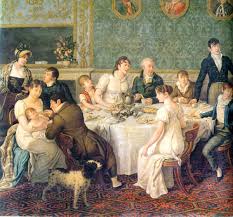
The Georgian Era, spanning from 1714 to 1830, was characterized by significant social and economic changes. Daily life varied greatly between social classes. The upper class enjoyed lavish lifestyles with grand houses, fine clothing, and a plethora of servants. They participated in activities such as theater, balls, and horse racing. The burgeoning middle class benefitted from the Industrial Revolution, which brought new jobs and opportunities. They experienced increasing comfort and leisure, reflected in hobbies like reading and attending coffeehouses. Meanwhile, the working class faced grueling long hours in factories or as domestic servants, often living in cramped, unsanitary conditions. Rural life remained largely unchanged with agriculture being the main livelihood. Both men and women had distinct roles; women from upper and middle classes were generally confined to domestic duties, although some engaged in writing or charity work, while lower-class women often worked as servants or in textiles. Social interactions and manners were highly formalized, and conformity to societal expectations was important. Overall, the Georgian Era was a time of stark contrasts in daily life based on one’s social standing.
| Seed data: | Link 1 |
|---|---|
| Host image: | StyleGAN neural net |
| Content creation: | GPT-3.5, |
Host

Kathy Mitchelle
Podcast Content
In stark contrast, the life of the working class and the poor was arduous and unrelenting. Industrialization was on the rise, and many flocked to growing cities like London, Manchester, and Birmingham in search of work. They toiled long hours in factories, mills, and mines under harsh conditions for meager wages. Child labor was rampant, and entire families often worked together to make ends meet. Housing for the working class was cramped and unsanitary, with multiple families frequently sharing a single dwelling. Public health was a growing concern, and diseases such as cholera and typhoid were common.
Education varied widely; while the wealthy had access to private tutors and prestigious institutions, many of the poor were illiterate. However, the era also saw the emergence of philanthropic efforts to establish schools for the underprivileged. Religion played a crucial role in daily life, with the Church of England being the predominant force, although dissenting Protestant denominations and the Catholic minority had their own communities and places of worship.
Marketplace towns bustled with activity, and fairs were popular events where people from various walks of life would gather, trade goods, and enjoy entertainment. The era also witnessed significant advancements in science, literature, and the arts, with figures like Sir Isaac Newton, Jane Austen, and William Blake leaving lasting legacies. Public debates, coffeehouses, and the advent of the newspaper culture fostered a more informed and opinionated populace.
Transportation was undergoing transformation, with the development of turnpike roads enhancing travel by stagecoach, while canals facilitated more efficient movement of goods. The postal system improved, enabling more reliable communication across distances. Despite the glaring social inequalities, the Georgian Era laid the groundwork for the modern British society, teeming with innovation, intellectual fervor, and a dynamic social landscape. As we reflect on this period, we gain valuable insights into the complexities and contrasts that shaped the daily lives of its inhabitants and the enduring impacts they left behind.